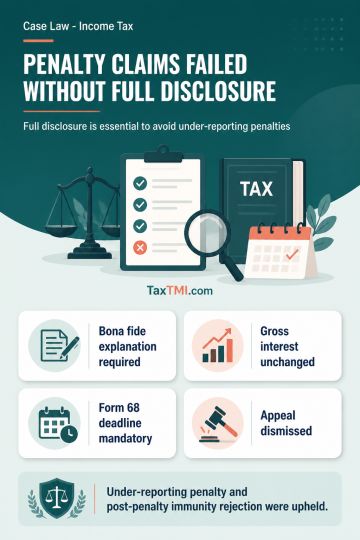
Bona fide disclosure requirements govern under-reporting penalties, and post-penalty immunity applications cannot secure available statutory protectio...
Certificate-of-origin verification procedure governs preferential customs benefits; denial without retroactive verification was set aside with consequ...
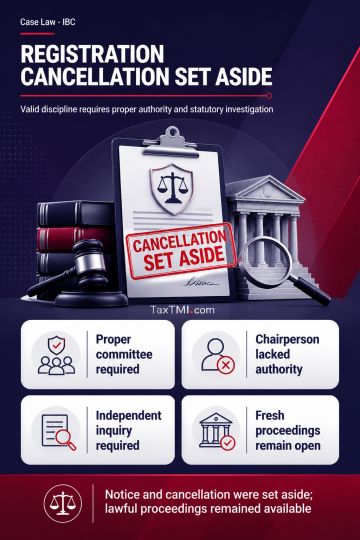
Disciplinary Committee jurisdiction and mandatory investigation requirements invalidated cancellation of an insolvency professional's registration and...
Retention of seized property survives where recorded reasons support proceeds of crime, while stayed investigation periods are excluded from limitatio...
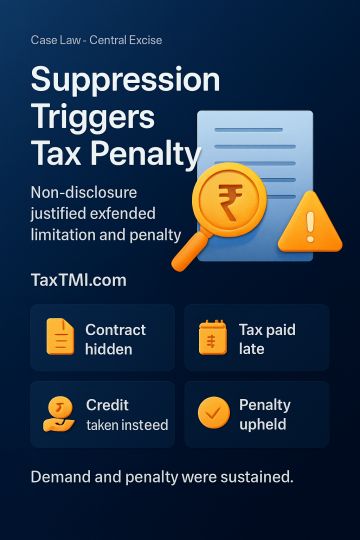
Extended limitation under indirect tax law applies only where fraud, collusion, wilful misstatement, suppression of facts, or contravention with intent to evade duty is shown, and the text treats non-disclosure of the contractual arrangement, delayed service tax payment, and suo motu credit taken instead of refund as sufficient to invoke it. It further notes that the same facts satisfy the basis for penalty under Rule 15(2) read with Section 11AC where suppression and wrongful availment of Cenvat credit are established. On that reasoning, the demand and penalty were sustained.
Extended limitation under indirect tax law applies only where fraud, collusion, wilful misstatement, suppression of facts, or contravention with intent to evade duty is shown, and the text treats non-disclosure of the contractual arrangement, delayed service tax payment, and suo motu credit taken instead of refund as sufficient to invoke it. It further notes that the same facts satisfy the basis for penalty under Rule 15(2) read with Section 11AC where suppression and wrongful availment of Cenvat credit are established. On that reasoning, the demand and penalty were sustained.
Note: It is a system-generated summary and is for quick reference only.
 TaxTMI
 of 4784











 Join Channel


 TaxTMI
