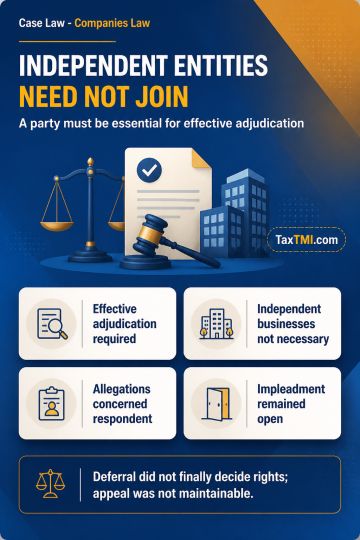
Necessary-party requirements limit impleadment of independent entities, while deferred consideration does not create an appealable adverse determinati...
Food supplement classification requires common parlance and authoritative tests, preventing treatment as proprietary Ayurvedic medicines without suppo...
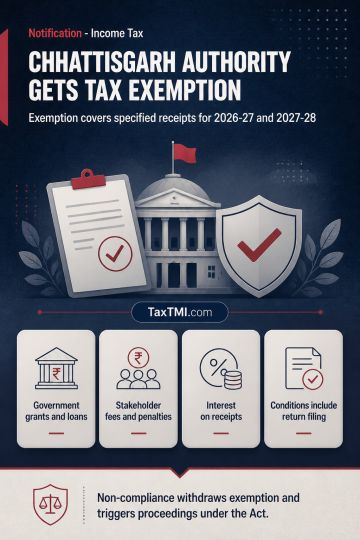
Specified regulatory authority income receives conditional tax exemption, subject to non-commercial activity, unchanged income character, and return f...
Tax exemption for regulatory authority income applies retrospectively, subject to non-commercial activity, unchanged income sources, and return-filing...
Input tax credit conditions remain constitutionally valid, with eligible recipient claims considered under GST circulars and retrospective filing dead...
Section 11D was held to operate prospectively because its penal character and plain language indicated application only to amounts collected after its introduction on 20-9-1991. The decisive factor was when the duty-like amounts were collected, not the date of the show-cause notice. The non obstante clause gave the provision overriding effect over inconsistent rules, but did not make it retrospective. Collections made before 20-9-1991 could not be recovered under the section, so the demand was unsustainable.
Section 11D was held to operate prospectively because its penal character and plain language indicated application only to amounts collected after its introduction on 20-9-1991. The decisive factor was when the duty-like amounts were collected, not the date of the show-cause notice. The non obstante clause gave the provision overriding effect over inconsistent rules, but did not make it retrospective. Collections made before 20-9-1991 could not be recovered under the section, so the demand was unsustainable.
Note: It is a system-generated summary and is for quick reference only.
 TaxTMI
 of 4792















 Join Channel



 TaxTMI

