Commercial vehicle depreciation, scientifically determined warranty provisions and exempt-income disallowances were resolved in favour of the taxpayer...
Inherited property sale proceeds require capital-gains treatment where ownership is supported by evidence, not suspicion or unverified signature doubt...
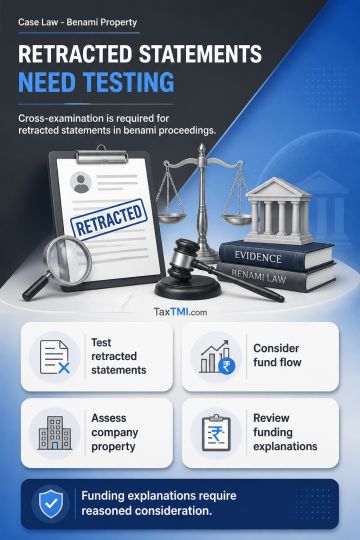
Cross-examination of retracted statements is essential where foundational evidence supports a benami allegation and documented funding explanations re...
Capital-goods exemption covers plant-modernisation accessories, while the import restriction applies only to earlier capital-goods components and spar...
Constitutional judicial review permits challenges to ECIRs and connected money-laundering proceedings where coercive action affects fundamental intere...
Section 11D was held to operate prospectively because its penal character and plain language indicated application only to amounts collected after its introduction on 20-9-1991. The decisive factor was when the duty-like amounts were collected, not the date of the show-cause notice. The non obstante clause gave the provision overriding effect over inconsistent rules, but did not make it retrospective. Collections made before 20-9-1991 could not be recovered under the section, so the demand was unsustainable.
Section 11D was held to operate prospectively because its penal character and plain language indicated application only to amounts collected after its introduction on 20-9-1991. The decisive factor was when the duty-like amounts were collected, not the date of the show-cause notice. The non obstante clause gave the provision overriding effect over inconsistent rules, but did not make it retrospective. Collections made before 20-9-1991 could not be recovered under the section, so the demand was unsustainable.
Note: It is a system-generated summary and is for quick reference only.
 TaxTMI
 of 4796





















 Join Channel



 TaxTMI
