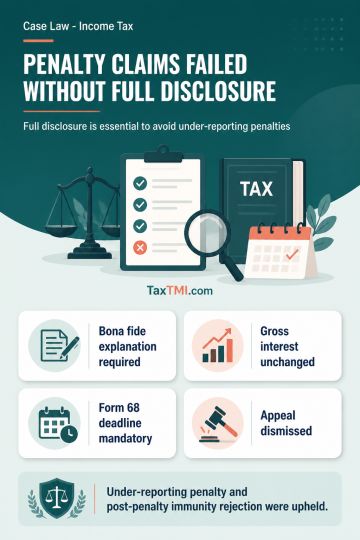
Bona fide disclosure requirements govern under-reporting penalties, and post-penalty immunity applications cannot secure available statutory protectio...
Certificate-of-origin verification procedure governs preferential customs benefits; denial without retroactive verification was set aside with consequ...
Disciplinary Committee jurisdiction and mandatory investigation requirements invalidated cancellation of an insolvency professional's registration and...
Retention of seized property survives where recorded reasons support proceeds of crime, while stayed investigation periods are excluded from limitatio...
The article explains that a writ petition challenging an appellate order was not entertained because an efficacious statutory appeal was available before the GST Appellate Tribunal. It notes that questions on the effect of a departmental circular and the application of amended Rule 89(5) could be examined in that appeal, so the High Court need not exercise Article 226 jurisdiction. Relying on Ratan Melting and Wire Industries, it reiterates that circulars reflect the executive view and cannot override the statute or bind courts. The petitioner was given liberty to pursue the statutory appeal within the notified period.
The article explains that a writ petition challenging an appellate order was not entertained because an efficacious statutory appeal was available before the GST Appellate Tribunal. It notes that questions on the effect of a departmental circular and the application of amended Rule 89(5) could be examined in that appeal, so the High Court need not exercise Article 226 jurisdiction. Relying on Ratan Melting and Wire Industries, it reiterates that circulars reflect the executive view and cannot override the statute or bind courts. The petitioner was given liberty to pursue the statutory appeal within the notified period.
Note: It is a system-generated summary and is for quick reference only.
 TaxTMI
 of 4784

















 Join Channel



 TaxTMI
