Admissibility of electronic evidence bars undervaluation demands where printouts, retracted statements and no cross-examination leave the case unprove...
Limitation in oppression and mismanagement proceedings: prior knowledge of removal and dilution barred the challenge, with valuation directions upheld...
Insolvency professional agency governance rules amended to add nominee directors, tighten independent director eligibility, and regulate managing dire...
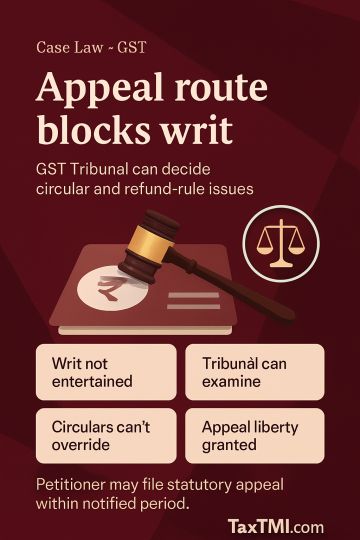
The article explains that a writ petition challenging an appellate order was not entertained because an efficacious statutory appeal was available before the GST Appellate Tribunal. It notes that questions on the effect of a departmental circular and the application of amended Rule 89(5) could be examined in that appeal, so the High Court need not exercise Article 226 jurisdiction. Relying on Ratan Melting and Wire Industries, it reiterates that circulars reflect the executive view and cannot override the statute or bind courts. The petitioner was given liberty to pursue the statutory appeal within the notified period.
The article explains that a writ petition challenging an appellate order was not entertained because an efficacious statutory appeal was available before the GST Appellate Tribunal. It notes that questions on the effect of a departmental circular and the application of amended Rule 89(5) could be examined in that appeal, so the High Court need not exercise Article 226 jurisdiction. Relying on Ratan Melting and Wire Industries, it reiterates that circulars reflect the executive view and cannot override the statute or bind courts. The petitioner was given liberty to pursue the statutory appeal within the notified period.
Note: It is a system-generated summary and is for quick reference only.
 TaxTMI
  TaxTMI
 of 4816


 Join Channel