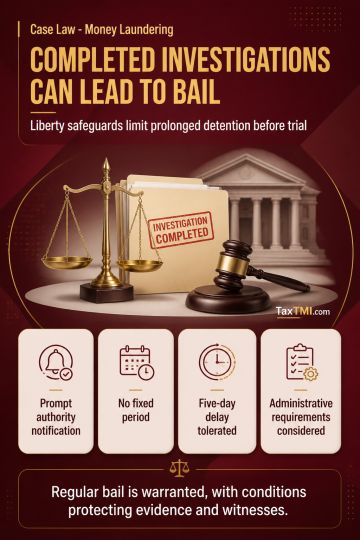
Constitutional personal-liberty safeguards limit PMLA twin bail conditions where completed investigations lead to prolonged incarceration before trial...
Automated airline software subscriptions without human intervention fail technical-services characterisation and do not make available underlying tech...
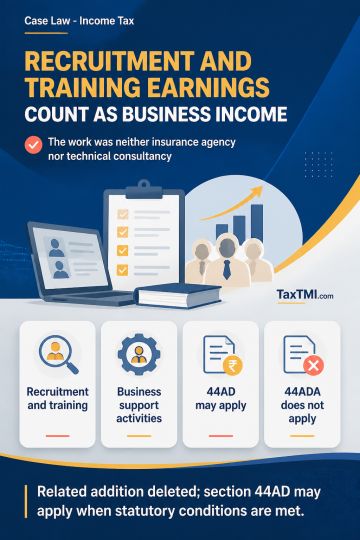
Business support recruitment and training receipts qualify for presumptive business taxation, not professional taxation under technical consultancy ru...
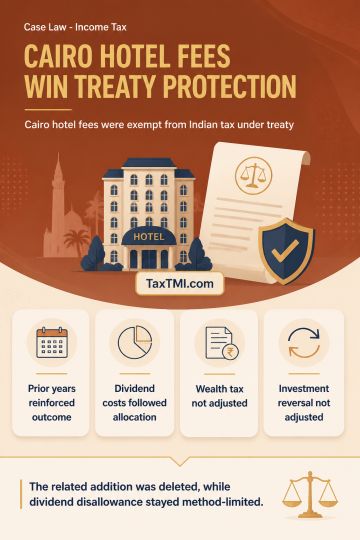
Treaty exemption for foreign permanent-establishment management fees prevailed, while dividend expense disallowance remained limited to an accepted al...
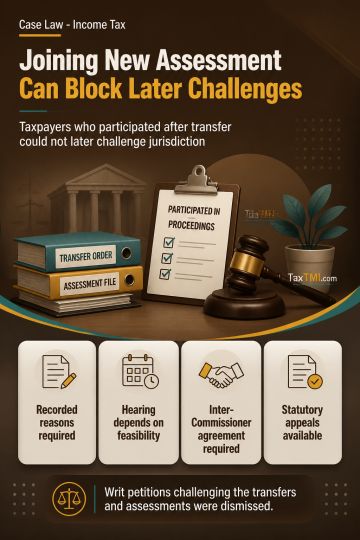
Centralised assessment transfers: participation after requesting centralisation can bar technical jurisdictional challenges, while assessment disputes...
Page of 4908
Press 'Enter' after typing page number.
21 to 40 of 98141 Results
❮
❯
❯❯
0 / 200
Expand Note
Add to Folder
No Folders have been created
+
Are you sure you want to delete "My most important" ?
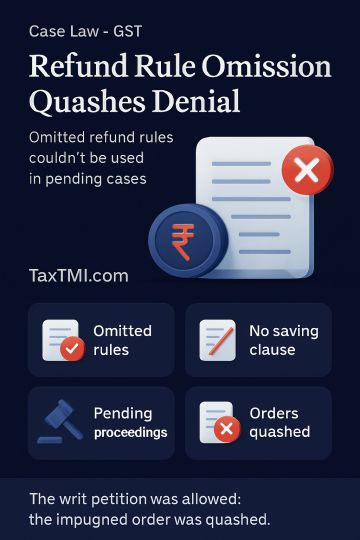
Omission of refund-restricting Rules 89(4B) and 96(10) without any saving clause rendered the omitted provision inapplicable to pending proceedings, including matters still before the Court or the adjudicating authority and orders not yet final, because they were not transactions past and closed. Applying the earlier Gujarat HC ratio, the Court held that the order-in-original and consequential action founded on the omitted rule could not be sustained. The writ petition was allowed and the impugned order and subsequent action were quashed.
Omission of refund-restricting Rules 89(4B) and 96(10) without any saving clause rendered the omitted provision inapplicable to pending proceedings, including matters still before the Court or the adjudicating authority and orders not yet final, because they were not transactions past and closed. Applying the earlier Gujarat HC ratio, the Court held that the order-in-original and consequential action founded on the omitted rule could not be sustained. The writ petition was allowed and the impugned order and subsequent action were quashed.
Note: It is a system-generated summary and is for quick reference only.
 TaxTMI
  TaxTMI
 of 4908