Transfer pricing and tax deductions upheld on established principles, while employee contributions and warranty provisions returned for fresh examinat...
Captive transfer pricing relies on industrial consumer tariffs, while genuine quotations can benchmark effluent treatment transfers under the Other Me...
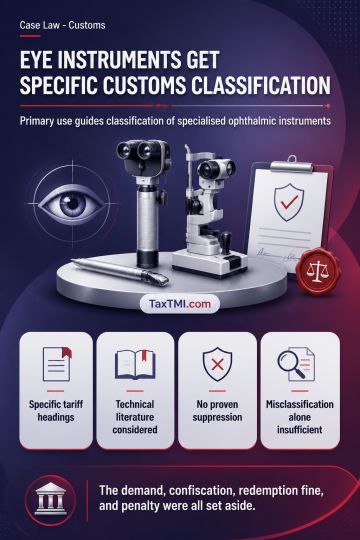
Specific tariff classification for ophthalmic instruments and extended limitation principles determine the treatment of duty demands, confiscation, an...
Integrated golf function determines classification, placing launch monitors and simulators under other golf equipment rather than measuring instrument...
Public servant status under anti-corruption law extends to recognised stock exchange leadership; constitutional and sanction challenges do not succeed...
Acquiescence, homebuyer protection and clean-slate resolution principles prevent landowners from disrupting an integrated project through late termina...
Page of 4784
Press 'Enter' after typing page number.
841 to 860 of 95673 Results
❮
❯
❯❯
0 / 200
Expand Note
Add to Folder
No Folders have been created
+
Are you sure you want to delete "My most important" ?
Depreciation on goodwill arising from amalgamation was allowed, as the Tribunal followed binding precedent that goodwill is a depreciable intangible asset and held that the cited provisions regulate actual cost, written down value and capital gains treatment, but do not create any express bar on depreciation for goodwill generated by excess consideration over net assets. It further held that the accounting treatment in the books was not determinative for tax purposes, and that fresh factual allegations could not be raised for the first time in second appeal. The transfer pricing adjustment for notional interest on overdue receivables from the associated enterprise was deleted because the assessee was debt free, had no significant interest cost, and no corresponding interest was charged on payables.
Depreciation on goodwill arising from amalgamation was allowed, as the Tribunal followed binding precedent that goodwill is a depreciable intangible asset and held that the cited provisions regulate actual cost, written down value and capital gains treatment, but do not create any express bar on depreciation for goodwill generated by excess consideration over net assets. It further held that the accounting treatment in the books was not determinative for tax purposes, and that fresh factual allegations could not be raised for the first time in second appeal. The transfer pricing adjustment for notional interest on overdue receivables from the associated enterprise was deleted because the assessee was debt free, had no significant interest cost, and no corresponding interest was charged on payables.
Note: It is a system-generated summary and is for quick reference only.
 TaxTMI
 of 4784

















 Join Channel



 TaxTMI