Inherited property sale proceeds require capital-gains treatment where ownership is supported by evidence, not suspicion or unverified signature doubt...
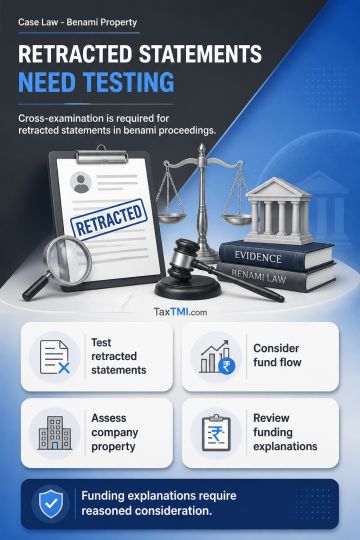
Cross-examination of retracted statements is essential where foundational evidence supports a benami allegation and documented funding explanations re...
Capital-goods exemption covers plant-modernisation accessories, while the import restriction applies only to earlier capital-goods components and spar...
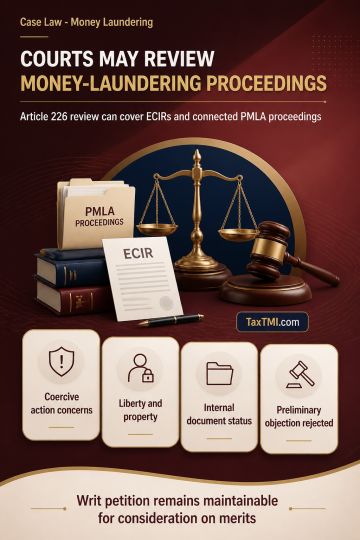
Constitutional judicial review permits challenges to ECIRs and connected money-laundering proceedings where coercive action affects fundamental intere...
Depreciation on goodwill arising from amalgamation was allowed, as the Tribunal followed binding precedent that goodwill is a depreciable intangible asset and held that the cited provisions regulate actual cost, written down value and capital gains treatment, but do not create any express bar on depreciation for goodwill generated by excess consideration over net assets. It further held that the accounting treatment in the books was not determinative for tax purposes, and that fresh factual allegations could not be raised for the first time in second appeal. The transfer pricing adjustment for notional interest on overdue receivables from the associated enterprise was deleted because the assessee was debt free, had no significant interest cost, and no corresponding interest was charged on payables.
Depreciation on goodwill arising from amalgamation was allowed, as the Tribunal followed binding precedent that goodwill is a depreciable intangible asset and held that the cited provisions regulate actual cost, written down value and capital gains treatment, but do not create any express bar on depreciation for goodwill generated by excess consideration over net assets. It further held that the accounting treatment in the books was not determinative for tax purposes, and that fresh factual allegations could not be raised for the first time in second appeal. The transfer pricing adjustment for notional interest on overdue receivables from the associated enterprise was deleted because the assessee was debt free, had no significant interest cost, and no corresponding interest was charged on payables.
Note: It is a system-generated summary and is for quick reference only.
 TaxTMI
 of 4792














 Join Channel



 TaxTMI