Cooperative society deposits, member-interest TDS exemption and credit-facility deduction claims require verification through records and supporting e...
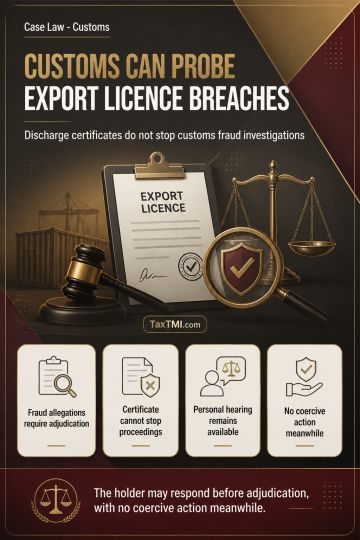
Customs jurisdiction over EPCG condition breaches survives export-obligation discharge certificates, requiring alleged fraud and misdeclaration to be ...
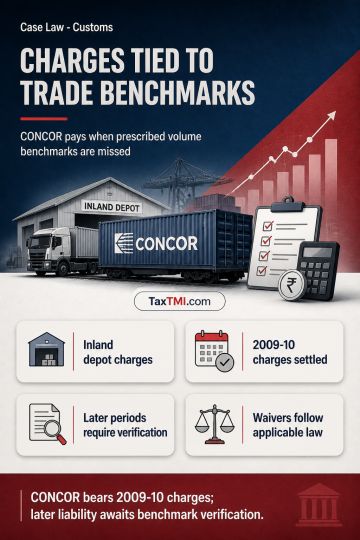
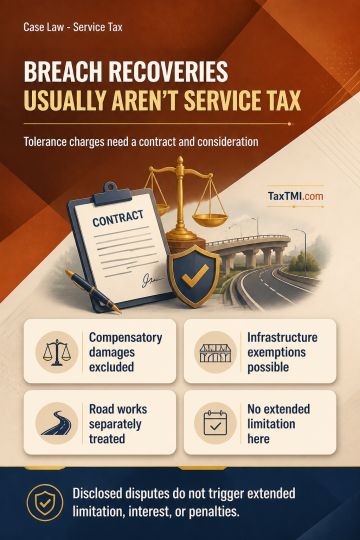
Contractual tolerance requires consideration; breach recoveries, qualifying public infrastructure services and road works escape service tax liability...
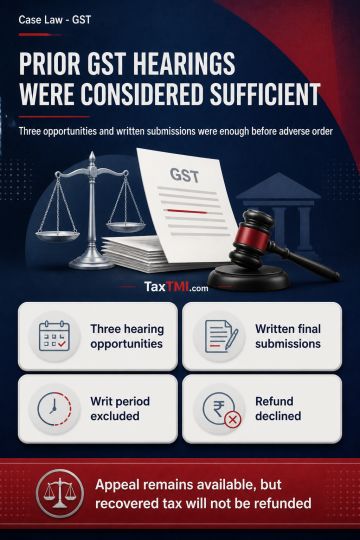
Personal hearing requirements in GST adjudication were satisfied by prior opportunities and written submissions; appellate limitation received writ-pe...
Page of 4790
Press 'Enter' after typing page number.
581 to 600 of 95794 Results
❮
❯
❯❯
0 / 200
Expand Note
Add to Folder
No Folders have been created
+
Are you sure you want to delete "My most important" ?
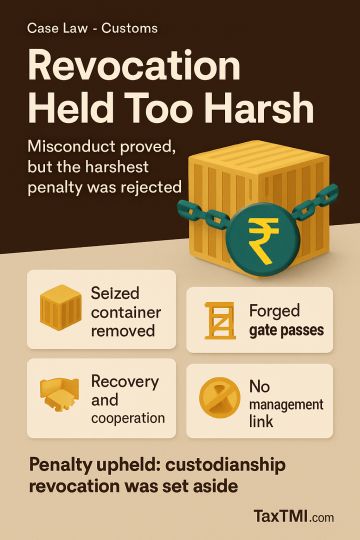
Illegal removal of a seized container and substitution through forged gate passes was treated as a serious breach of HCCAR supervision and customs compliance, but revocation of custodianship was held to be a disproportionate response. The Tribunal noted recovery of the goods, police findings showing no material against management, cooperation with investigation, and corrective measures taken thereafter. It upheld penalty for the violations but declined the severest consequence of revocation. On vicarious liability, it held that employee misconduct alone, without evidence of knowledge, connivance or conscious facilitation by management, could not justify revocation, and the Department failed to show grounds for appellate interference.
Illegal removal of a seized container and substitution through forged gate passes was treated as a serious breach of HCCAR supervision and customs compliance, but revocation of custodianship was held to be a disproportionate response. The Tribunal noted recovery of the goods, police findings showing no material against management, cooperation with investigation, and corrective measures taken thereafter. It upheld penalty for the violations but declined the severest consequence of revocation. On vicarious liability, it held that employee misconduct alone, without evidence of knowledge, connivance or conscious facilitation by management, could not justify revocation, and the Department failed to show grounds for appellate interference.
Note: It is a system-generated summary and is for quick reference only.
 TaxTMI
 of 4790







 Join Channel


 TaxTMI