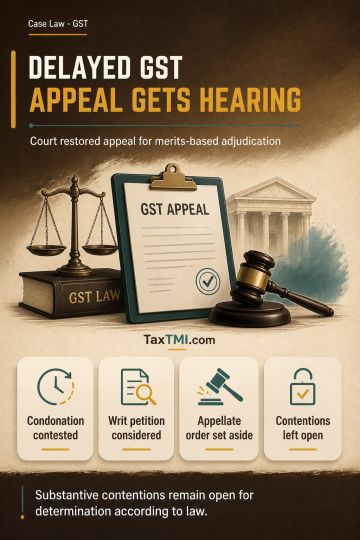
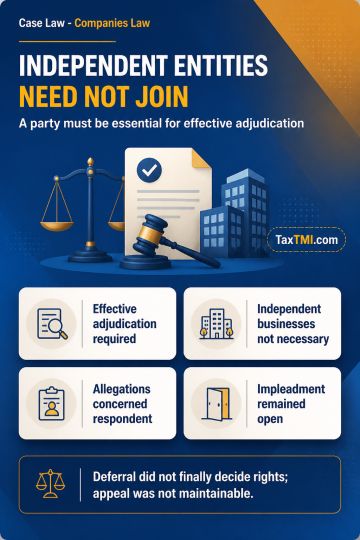
Necessary-party requirements limit impleadment of independent entities, while deferred consideration does not create an appealable adverse determinati...
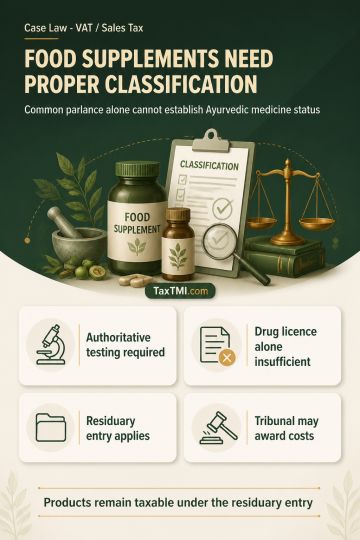
Food supplement classification requires common parlance and authoritative tests, preventing treatment as proprietary Ayurvedic medicines without suppo...
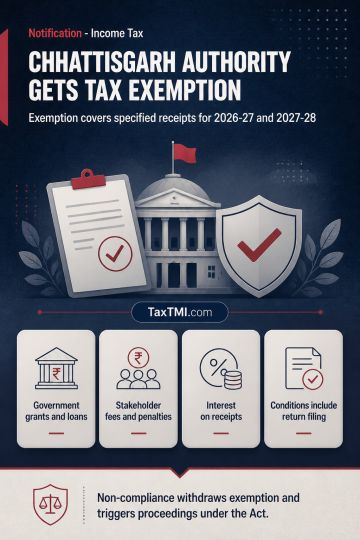
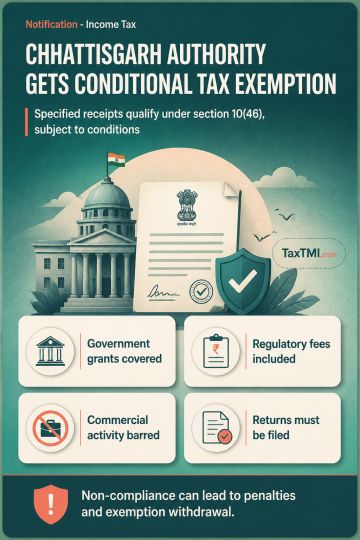
Specified regulatory authority income receives conditional tax exemption, subject to non-commercial activity, unchanged income character, and return f...
Tax exemption for regulatory authority income applies retrospectively, subject to non-commercial activity, unchanged income sources, and return-filing...
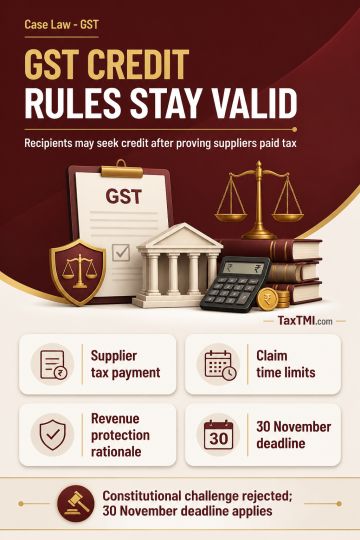
Input tax credit conditions remain constitutionally valid, with eligible recipient claims considered under GST circulars and retrospective filing dead...
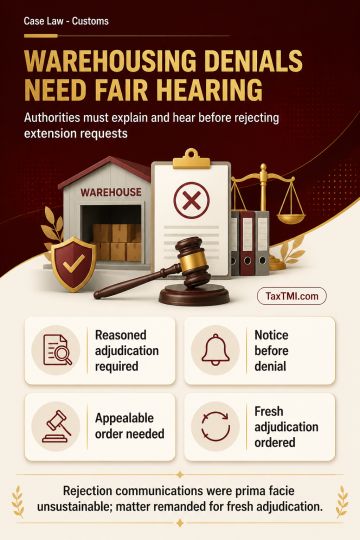
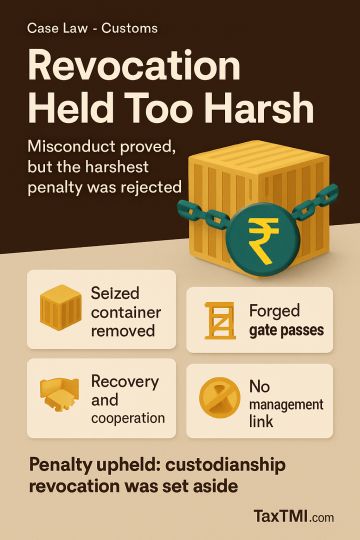
Illegal removal of a seized container and substitution through forged gate passes was treated as a serious breach of HCCAR supervision and customs compliance, but revocation of custodianship was held to be a disproportionate response. The Tribunal noted recovery of the goods, police findings showing no material against management, cooperation with investigation, and corrective measures taken thereafter. It upheld penalty for the violations but declined the severest consequence of revocation. On vicarious liability, it held that employee misconduct alone, without evidence of knowledge, connivance or conscious facilitation by management, could not justify revocation, and the Department failed to show grounds for appellate interference.
Illegal removal of a seized container and substitution through forged gate passes was treated as a serious breach of HCCAR supervision and customs compliance, but revocation of custodianship was held to be a disproportionate response. The Tribunal noted recovery of the goods, police findings showing no material against management, cooperation with investigation, and corrective measures taken thereafter. It upheld penalty for the violations but declined the severest consequence of revocation. On vicarious liability, it held that employee misconduct alone, without evidence of knowledge, connivance or conscious facilitation by management, could not justify revocation, and the Department failed to show grounds for appellate interference.
Note: It is a system-generated summary and is for quick reference only.
 TaxTMI
 of 4792





 Join Channel


 TaxTMI