Just a moment...

Top
Help
×

By creating an account you can:

Logo TaxTMI
>
Call Us / Help / Feedback

Contact Us At :

E-mail: [email protected]

Call / WhatsApp at: +91 99117 96707

For more information, Check Contact Us

FAQs :

To know Frequently Asked Questions, Check FAQs

Most Asked Video Tutorials :

For more tutorials, Check Video Tutorials

Submit Feedback/Suggestion :

Email :
Please provide your email address so we can follow up on your feedback.
Category :
Description :
Min 15 characters0/2000
Add to...
You have not created any category. Kindly create one to bookmark this item!
Create New Category
Hide
Title :
Description :
❮❮ Hide
Default View
Expand ❯❯
Close ✕
🔎 Highlights - Adv. Search
TEXT SEARCH:

Press 'Enter' to add multiple search terms. Rules for Better Search

Search In:
Main Text + AI Text
  • Main Text
  • Main Text + AI Text
  • AI Text
Law:
---- All Laws----
  • ---- All Laws----
  • Income Tax
  • Direct Taxes
  • Benami Property
  • Central GST Laws
  • SGST - State GST Laws
  • Customs
  • FTP - Foreign Trade Policy
  • SEZ - Special Economic Zone
  • FEMA - Foreign Exchange Management
  • Companies Law
  • SEBI - Securities & Exchange Board of India
  • IBC - Insolvency and Bankruptcy
  • Law of Competition
  • PMLA - Money-Laundering
  • Indian Laws
  • Bill / Finance Bills
  • Wealth Tax
  • Service Tax
  • Central Excise
  • VAT / Sales Tax
Month:
---- All Months ----
  • ---- All Months ----
  • January
  • February
  • March
  • April
  • May
  • June
  • July
  • August
  • September
  • October
  • November
  • December
Year:
---- All Years ----
  • ---- All Years ----
  • 2026
  • 2025
  • 2024
  • 2023
  • 2022
  • 2021
  • 2020
  • 2019
  • 2018
  • 2017
  • 2016
  • 2015
  • 2014
  • 2013
  • 2012
  • 2011
Sort By: ?
In Sort By 'Default', exact matches for text search are shown at the top, followed by the remaining results in their regular order.
RelevanceDefaultDate
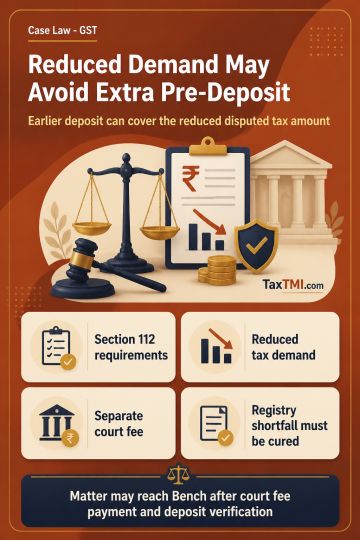
    Pre-deposit rules after reduced tax demand may avoid duplicate payment, while deficient court fees must be cured before admission.
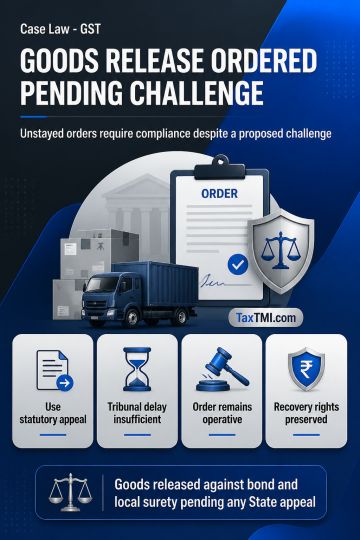
    Statutory appellate remedy and compliance with an unstayed order: goods released subject to bond and local surety
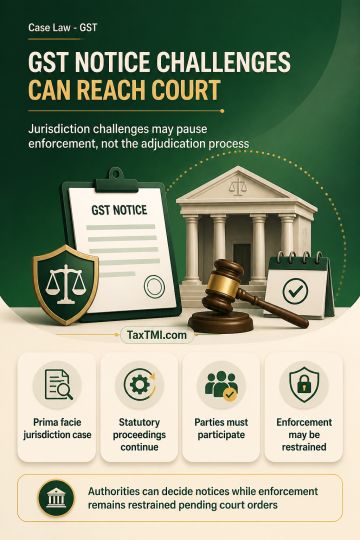
    Jurisdictional challenges can sustain writ scrutiny of show-cause notices while enforcement remains restrained pending adjudication.
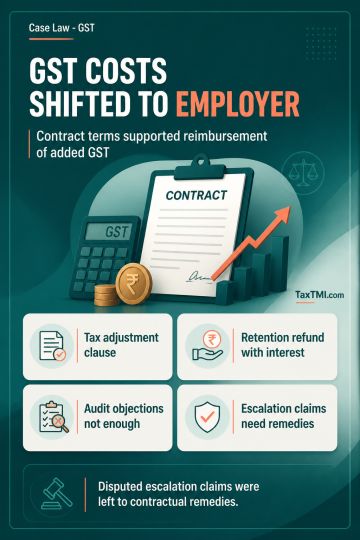
    GST transition under contract clauses shifts additional tax burden to the employer, while escalation disputes proceed through contractual remedies
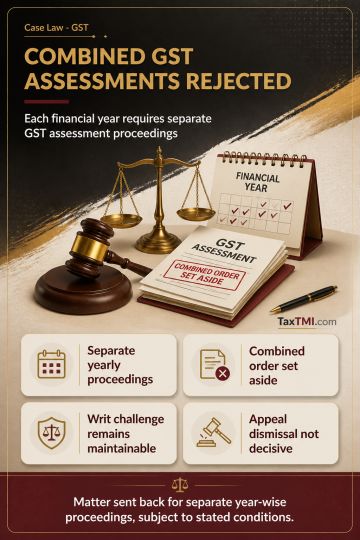
    Year-wise tax assessments required: composite orders invalid, while writ challenges remain maintainable despite appellate dismissal
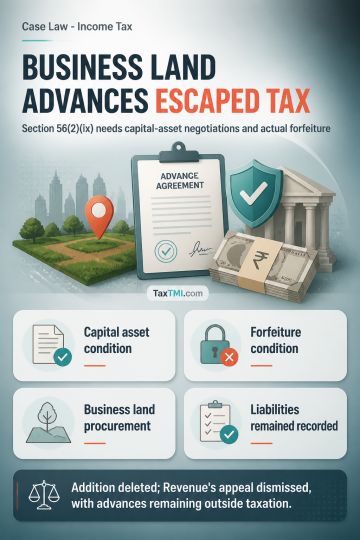
    Section 56(2)(ix) requires advance negotiations for a capital asset and forfeiture; business land-procurement advances therefore escaped taxation
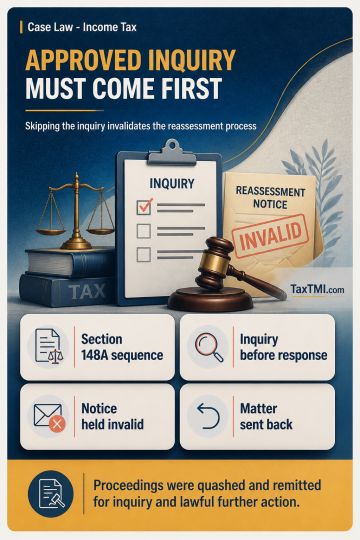
    Mandatory pre-notice inquiry under section 148A: bypassing an approved inquiry invalidates reassessment proceedings and requires fresh action.
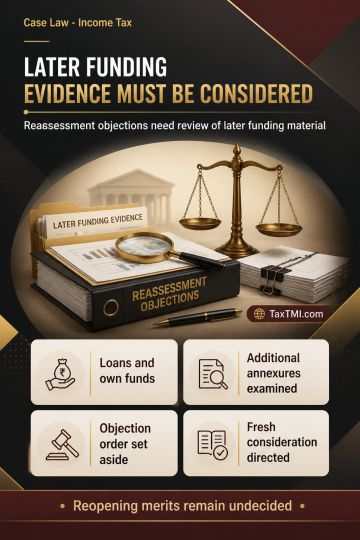
    Reassessment objections require consideration of later material on funding sources; merits of reopening remain open for fresh decision.
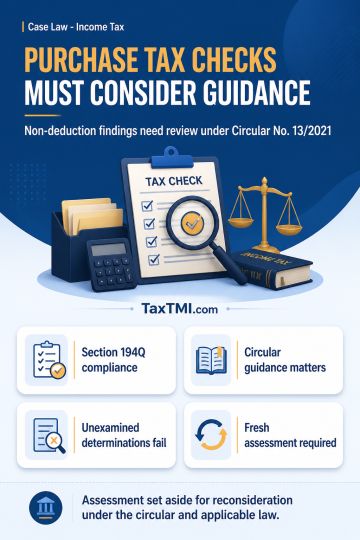
    Binding administrative guidance requires consideration in purchase-tax assessments; unexamined tax determinations cannot stand and require fresh recon...
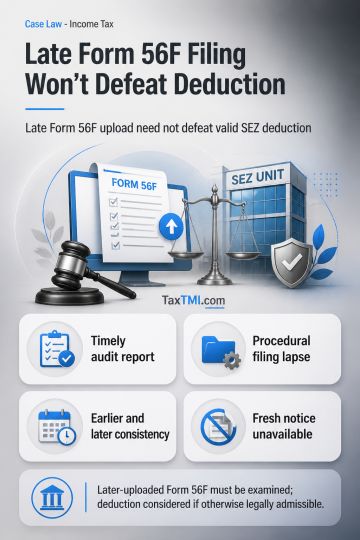
    Procedural lapse in Form 56F filing cannot defeat a valid SEZ deduction claim where the report was timely obtained and later uploaded
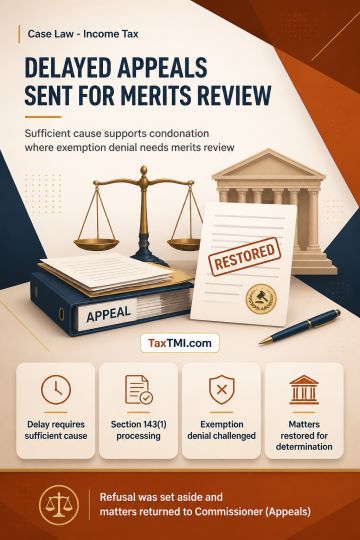
    Sufficient cause and merits-based adjudication guide condonation of delayed appeals challenging section 143(1) processing and exemption denial.
    Full and true disclosure governs settlement applications; income cannot be recharacterised under Sections 69B and 115BBE in settlement proceedings
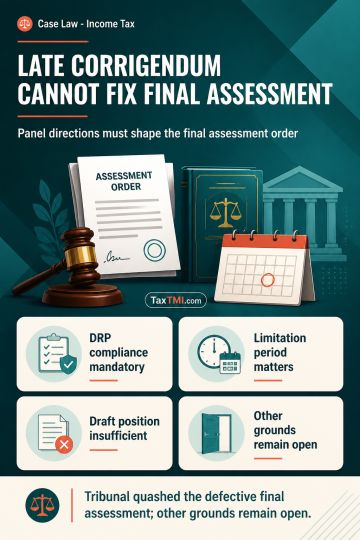
    Mandatory DRP directions must shape the final assessment; a post-limitation corrigendum cannot cure the statutory defect.
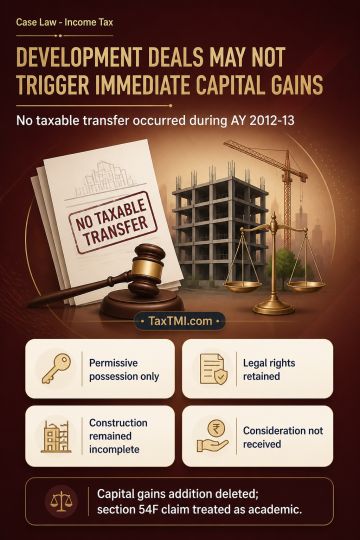
    Development agreements require legal possession or effective enjoyment for capital gains transfer; permissive possession and deferred consideration de...
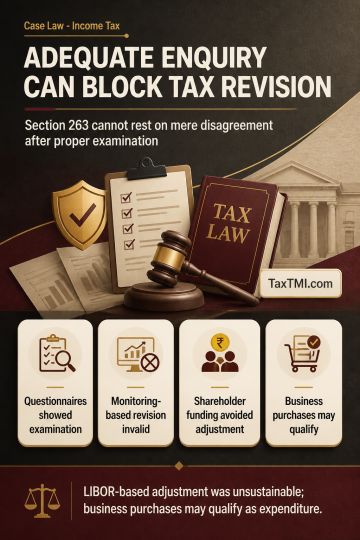
    Adequate enquiry limits section 263 revision; shareholder funding and commercially expedient purchases may avoid tax adjustments
    Pecuniary jurisdiction for scrutiny notices is mandatory; notice by the wrong officer can invalidate the resulting assessment.
    Open-access medical and educational activities outweigh an isolated religious object clause, supporting charitable registration and donation approval
    Non-recourse receivables assignment is a sale, not borrowing; alleged discounting charges are not interest for TDS purposes.
    Prolonged sterilisation of development rights supports capital-gains treatment, while business-income disallowances cannot govern capital-gains comput...
    Turnover filters and receivables benchmarking reshape software-services transfer pricing: high-turnover comparables excluded and interest recomputed a...
❯❯
MaximizeMaximizeMaximize
0 / 200
Expand Note
Add to Folder

No Folders have been created

    +

    Are you sure you want to delete "My most important" ?

    NOTE:

    Highlights
    Showing Results for :
    Reset Filters
    Results Found:
    Show All SummariesHide All Summaries

    Highlights

    Back

    All Highlights

    Showing Results for :
    Reset Filters
      No Records Found

      Highlights

      Back

      All Highlights

      whatsappJoin Channel
      Showing Results for : Reset Filters

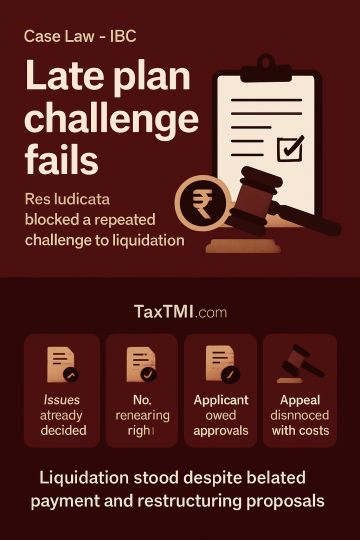
      Res judicata barred the challenge because it repeated issues...

      Res judicata bars collateral attacks on unimplemented resolution plans; belated payment proposals cannot defeat liquidation.

      Contents
      Summary
      Note

      Note

      -

      Bookmark

      Print

      Print

      IBCJuly 9, 2026Case LawsAT
      Res judicata barred the challenge because it repeated issues already decided against the successful resolution applicant, and the liquidation direction merely carried forward earlier final orders aimed at closure under the insolvency framework. The tribunal held that a post-reservation application for a one-time payment proposal did not create any right to rehearing, and the unilateral restructuring plea was a belated attempt to obstruct liquidation. It also held that regulatory approvals were the applicant's own responsibility under the approved plan; mere pendency of approval requests and repeated non-payment could not justify indefinite delay. Prolonged non-implementation, value erosion and lack of credible performance therefore justified liquidation, and the appeal was dismissed with costs.

      Topics

      ActsIncome Tax