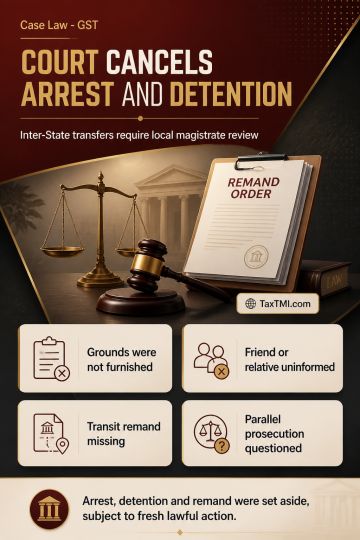
Arrest safeguards and transit remand requirements invalidated detention following inter-State transfer without communicated grounds or magistrate auth...
Arrest safeguards require disclosed grounds, relative intimation and transit remand, while duplicate prosecution under the CGST framework is unsustain...
Document Identification Number defects can invalidate GST assessments, with delayed challenges entertained conditionally where patent irregularities e...
Windmill commissioning evidence supported higher depreciation where grid connection and electricity generation proved operational use before the relev...
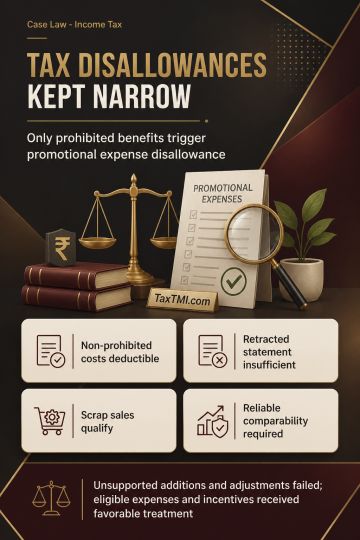
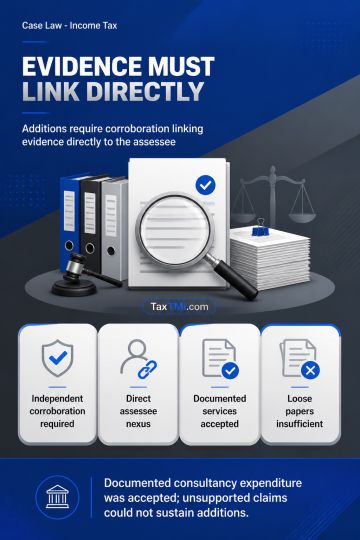
Pharmaceutical promotion and transfer-pricing comparability principles limited disallowances, while uncorroborated search allegations and unsupported ...
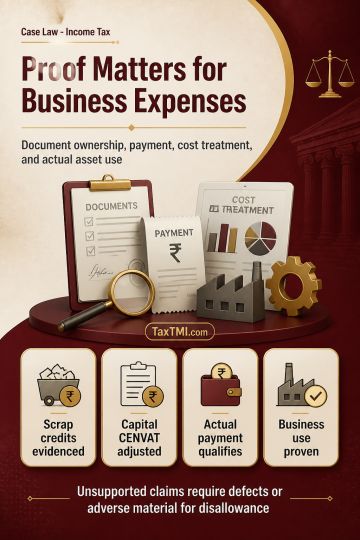
Business expenditure substantiation supports scrap credits, statutory payments and expense claims, while depreciation requires proof of actual busines...
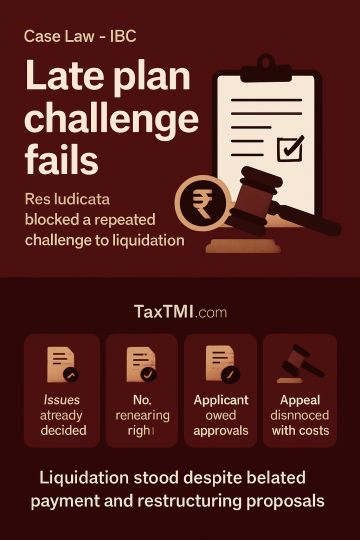
Res judicata barred the challenge because it repeated issues already decided against the successful resolution applicant, and the liquidation direction merely carried forward earlier final orders aimed at closure under the insolvency framework. The tribunal held that a post-reservation application for a one-time payment proposal did not create any right to rehearing, and the unilateral restructuring plea was a belated attempt to obstruct liquidation. It also held that regulatory approvals were the applicant's own responsibility under the approved plan; mere pendency of approval requests and repeated non-payment could not justify indefinite delay. Prolonged non-implementation, value erosion and lack of credible performance therefore justified liquidation, and the appeal was dismissed with costs.
Res judicata barred the challenge because it repeated issues already decided against the successful resolution applicant, and the liquidation direction merely carried forward earlier final orders aimed at closure under the insolvency framework. The tribunal held that a post-reservation application for a one-time payment proposal did not create any right to rehearing, and the unilateral restructuring plea was a belated attempt to obstruct liquidation. It also held that regulatory approvals were the applicant's own responsibility under the approved plan; mere pendency of approval requests and repeated non-payment could not justify indefinite delay. Prolonged non-implementation, value erosion and lack of credible performance therefore justified liquidation, and the appeal was dismissed with costs.
Note: It is a system-generated summary and is for quick reference only.
 TaxTMI
 of 4790









 Join Channel


 TaxTMI
