Trademark depreciation and section 14A adjustments: ITAT applies consistency, independent book-profit computation, and no disallowance without exempt ...
Rebuttable search presumptions and corroboration standards shaped deletion of unsubstantiated additions, while rental income and limited profit estima...
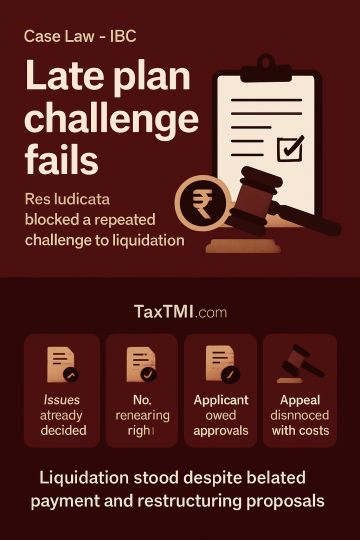
Res judicata barred the challenge because it repeated issues already decided against the successful resolution applicant, and the liquidation direction merely carried forward earlier final orders aimed at closure under the insolvency framework. The tribunal held that a post-reservation application for a one-time payment proposal did not create any right to rehearing, and the unilateral restructuring plea was a belated attempt to obstruct liquidation. It also held that regulatory approvals were the applicant's own responsibility under the approved plan; mere pendency of approval requests and repeated non-payment could not justify indefinite delay. Prolonged non-implementation, value erosion and lack of credible performance therefore justified liquidation, and the appeal was dismissed with costs.
Res judicata barred the challenge because it repeated issues already decided against the successful resolution applicant, and the liquidation direction merely carried forward earlier final orders aimed at closure under the insolvency framework. The tribunal held that a post-reservation application for a one-time payment proposal did not create any right to rehearing, and the unilateral restructuring plea was a belated attempt to obstruct liquidation. It also held that regulatory approvals were the applicant's own responsibility under the approved plan; mere pendency of approval requests and repeated non-payment could not justify indefinite delay. Prolonged non-implementation, value erosion and lack of credible performance therefore justified liquidation, and the appeal was dismissed with costs.
Note: It is a system-generated summary and is for quick reference only.
 TaxTMI
  TaxTMI
 of 4817


 Join Channel