Clean slate principle extinguishes uncrystallised operational claims and bars continuation of pending recovery and arbitral proceedings after plan app...
Works contract classification governs composite layout-development contracts where VAT-paid goods are transferred alongside construction and infrastru...
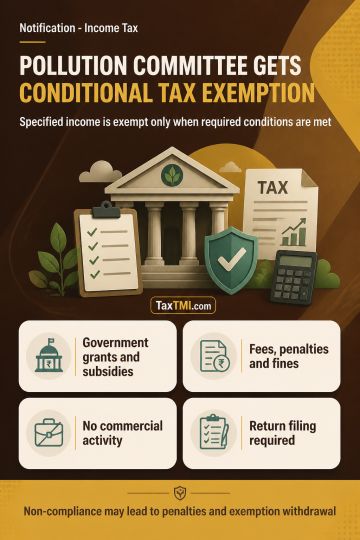
Specified income tax exemption for pollution control body remains conditional on non-commercial activity, unchanged income character, and return filin...
Jurisdictional facts in certificate-of-origin discrepancies can support customs show-cause proceedings, leaving factual explanations for departmental ...
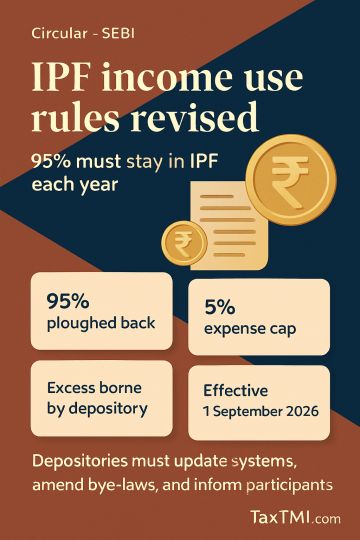
Interest or income from a depository's IPF must now be substantially retained in the fund: at least 95% received every year is to be ploughed back to IPF, while up to 5% may be used for dedicated IPF staff, administrative and statutory expenses such as taxes and audit fees. Any excess expenditure beyond that cap must be borne by the depository, and any unutilised amount in the same financial year must be returned to IPF. The revised norms apply from 1 September 2026, and depositories must update systems, amend bye-laws and inform market participants.
Interest or income from a depository's IPF must now be substantially retained in the fund: at least 95% received every year is to be ploughed back to IPF, while up to 5% may be used for dedicated IPF staff, administrative and statutory expenses such as taxes and audit fees. Any excess expenditure beyond that cap must be borne by the depository, and any unutilised amount in the same financial year must be returned to IPF. The revised norms apply from 1 September 2026, and depositories must update systems, amend bye-laws and inform market participants.
Note: It is a system-generated summary and is for quick reference only.
 TaxTMI
 of 4786




















 Join Channel


 TaxTMI