Agency in CNG distribution makes outlet operators commission agents, rendering taxable Business Auxiliary Service rather than purchasing goods for res...
Composite inpatient healthcare supply may retain exemption despite MRP medicine billing, while separate taxable sale characterisation remains disputed...
Working-capital adjustment determines whether software-services transfer-pricing margins fall within the statutory tolerance range, eliminating any ad...
Permanent establishment deductions upheld for expatriate salaries, direct costs and trading losses, while head-office costs require fresh classificati...
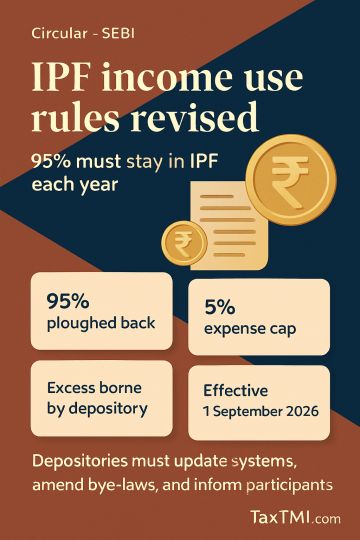
Interest or income from a depository's IPF must now be substantially retained in the fund: at least 95% received every year is to be ploughed back to IPF, while up to 5% may be used for dedicated IPF staff, administrative and statutory expenses such as taxes and audit fees. Any excess expenditure beyond that cap must be borne by the depository, and any unutilised amount in the same financial year must be returned to IPF. The revised norms apply from 1 September 2026, and depositories must update systems, amend bye-laws and inform market participants.
Interest or income from a depository's IPF must now be substantially retained in the fund: at least 95% received every year is to be ploughed back to IPF, while up to 5% may be used for dedicated IPF staff, administrative and statutory expenses such as taxes and audit fees. Any excess expenditure beyond that cap must be borne by the depository, and any unutilised amount in the same financial year must be returned to IPF. The revised norms apply from 1 September 2026, and depositories must update systems, amend bye-laws and inform market participants.
Note: It is a system-generated summary and is for quick reference only.
 TaxTMI
 of 4786




















 Join Channel


 TaxTMI
