Administrative fraud classification suspension does not halt independent criminal investigation or warrant-based searches into alleged economic offenc...
Arrest safeguards and transit remand requirements invalidated detention following inter-State transfer without communicated grounds or magistrate auth...
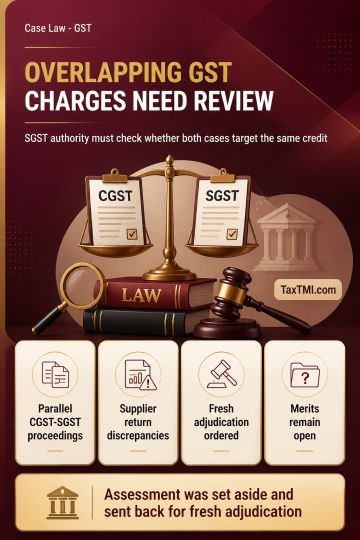
Arrest safeguards require disclosed grounds, relative intimation and transit remand, while duplicate prosecution under the CGST framework is unsustain...
Document Identification Number defects can invalidate GST assessments, with delayed challenges entertained conditionally where patent irregularities e...
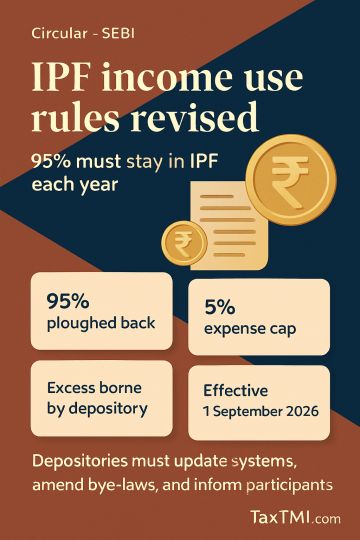
Interest or income from a depository's IPF must now be substantially retained in the fund: at least 95% received every year is to be ploughed back to IPF, while up to 5% may be used for dedicated IPF staff, administrative and statutory expenses such as taxes and audit fees. Any excess expenditure beyond that cap must be borne by the depository, and any unutilised amount in the same financial year must be returned to IPF. The revised norms apply from 1 September 2026, and depositories must update systems, amend bye-laws and inform market participants.
Interest or income from a depository's IPF must now be substantially retained in the fund: at least 95% received every year is to be ploughed back to IPF, while up to 5% may be used for dedicated IPF staff, administrative and statutory expenses such as taxes and audit fees. Any excess expenditure beyond that cap must be borne by the depository, and any unutilised amount in the same financial year must be returned to IPF. The revised norms apply from 1 September 2026, and depositories must update systems, amend bye-laws and inform market participants.
Note: It is a system-generated summary and is for quick reference only.
 TaxTMI
 of 4789
















 Join Channel


 TaxTMI
