Transfer pricing comparability requires functional alignment, reliable financial data, and careful review of working capital and receivables adjustmen...
Transfer pricing rules require benchmarking corporate guarantees and associated-enterprise advances, while invalid domestic-transaction adjustments ca...
Prospective sugar export prohibition required registered letters of credit; private contracts and export quotas created no enforceable continuation ri...
Retroactive interim-moratorium exclusion permits protective asset disclosure and preservation measures against personal guarantors pending arbitration...
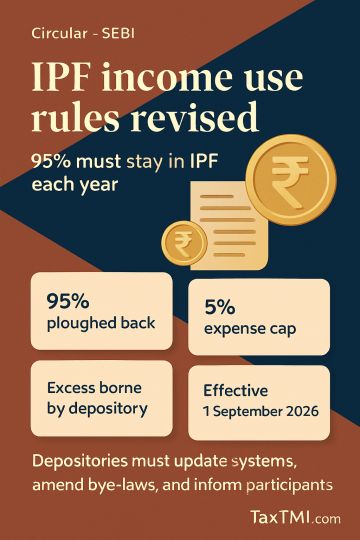
Interest or income from a depository's IPF must now be substantially retained in the fund: at least 95% received every year is to be ploughed back to IPF, while up to 5% may be used for dedicated IPF staff, administrative and statutory expenses such as taxes and audit fees. Any excess expenditure beyond that cap must be borne by the depository, and any unutilised amount in the same financial year must be returned to IPF. The revised norms apply from 1 September 2026, and depositories must update systems, amend bye-laws and inform market participants.
Interest or income from a depository's IPF must now be substantially retained in the fund: at least 95% received every year is to be ploughed back to IPF, while up to 5% may be used for dedicated IPF staff, administrative and statutory expenses such as taxes and audit fees. Any excess expenditure beyond that cap must be borne by the depository, and any unutilised amount in the same financial year must be returned to IPF. The revised norms apply from 1 September 2026, and depositories must update systems, amend bye-laws and inform market participants.
Note: It is a system-generated summary and is for quick reference only.
 TaxTMI
 of 4792




















 Join Channel


 TaxTMI