Transaction value rejection requires reliable corroboration; refundable VAT is excluded and temporary registration does not defeat new-vehicle exempti...
Appellate jurisdiction remains available where a wrist-worn gold ornament cannot conclusively be characterised as imported baggage at the preliminary ...
Written complaint requirement bars cognizance on police reports for securities offences, while unsupported breach of trust and cheating allegations fa...
Risk-based postal import clearance standardises electronic assessment, document requests, duty realisation and delivery controls at Foreign Post Offic...
Customs Cargo Service Provider appointment extends custodianship to additional terminal land, subject to cargo-control, security and licence condition...
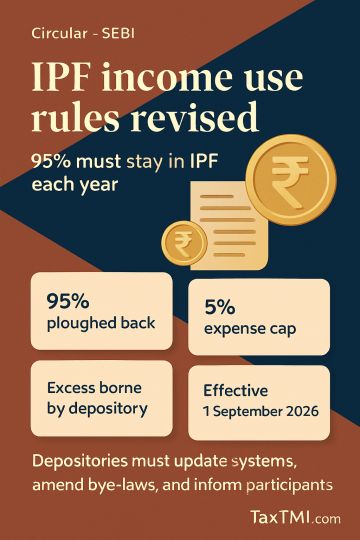
Interest or income from a depository's IPF must now be substantially retained in the fund: at least 95% received every year is to be ploughed back to IPF, while up to 5% may be used for dedicated IPF staff, administrative and statutory expenses such as taxes and audit fees. Any excess expenditure beyond that cap must be borne by the depository, and any unutilised amount in the same financial year must be returned to IPF. The revised norms apply from 1 September 2026, and depositories must update systems, amend bye-laws and inform market participants.
Interest or income from a depository's IPF must now be substantially retained in the fund: at least 95% received every year is to be ploughed back to IPF, while up to 5% may be used for dedicated IPF staff, administrative and statutory expenses such as taxes and audit fees. Any excess expenditure beyond that cap must be borne by the depository, and any unutilised amount in the same financial year must be returned to IPF. The revised norms apply from 1 September 2026, and depositories must update systems, amend bye-laws and inform market participants.
Note: It is a system-generated summary and is for quick reference only.
 TaxTMI
 of 4792






















 Join Channel


 TaxTMI