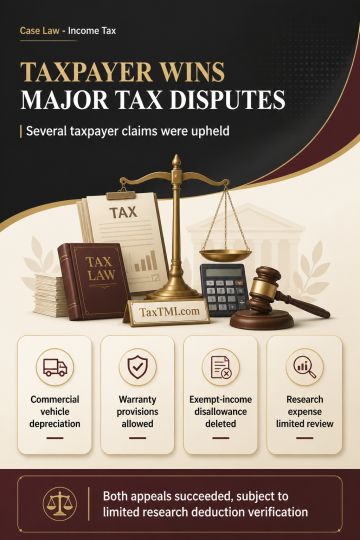
Commercial vehicle depreciation, scientifically determined warranty provisions and exempt-income disallowances were resolved in favour of the taxpayer...
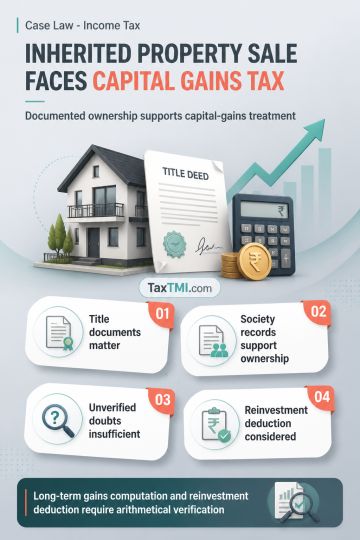
Inherited property sale proceeds require capital-gains treatment where ownership is supported by evidence, not suspicion or unverified signature doubt...
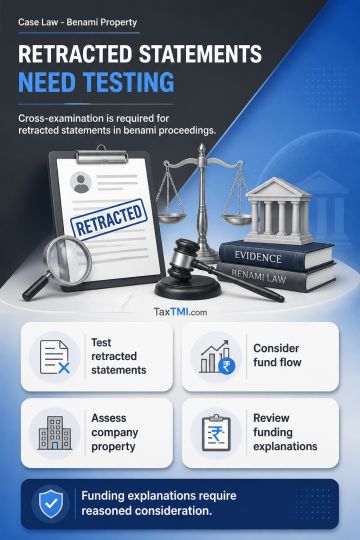
Cross-examination of retracted statements is essential where foundational evidence supports a benami allegation and documented funding explanations re...
Capital-goods exemption covers plant-modernisation accessories, while the import restriction applies only to earlier capital-goods components and spar...
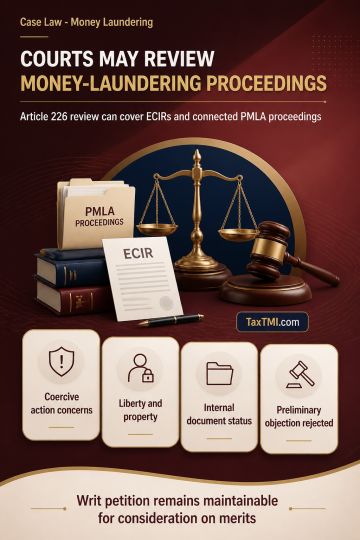
Constitutional judicial review permits challenges to ECIRs and connected money-laundering proceedings where coercive action affects fundamental intere...
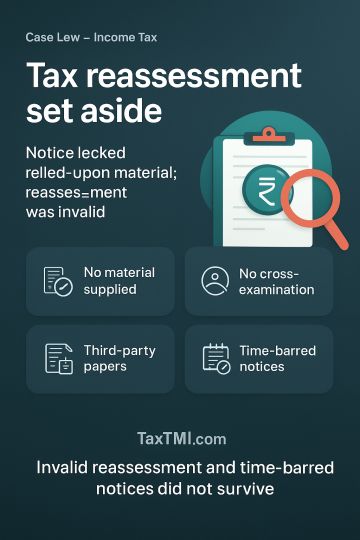
ITAT upheld invalid reassessment where the show-cause notice under the reopening procedure was not accompanied by the relied-upon material, despite the assessee's request, and held that RMS or Insight inputs did not dispense with independent verification, disclosure of material, or observance of natural justice. It further held that the appellate authority could test the legality of the reopening while hearing the reassessment appeal. Additions based on third-party seized papers, statements and loose sheets failed because the material was not properly furnished, cross-examination was denied, and the documents were uncorroborated. Section 69A was held inapplicable to alleged cash borrowing. Later-year notices were also held time-barred, so the consequential reassessments did not survive.
ITAT upheld invalid reassessment where the show-cause notice under the reopening procedure was not accompanied by the relied-upon material, despite the assessee's request, and held that RMS or Insight inputs did not dispense with independent verification, disclosure of material, or observance of natural justice. It further held that the appellate authority could test the legality of the reopening while hearing the reassessment appeal. Additions based on third-party seized papers, statements and loose sheets failed because the material was not properly furnished, cross-examination was denied, and the documents were uncorroborated. Section 69A was held inapplicable to alleged cash borrowing. Later-year notices were also held time-barred, so the consequential reassessments did not survive.
Note: It is a system-generated summary and is for quick reference only.
 TaxTMI
 of 4796






 Join Channel


 TaxTMI
