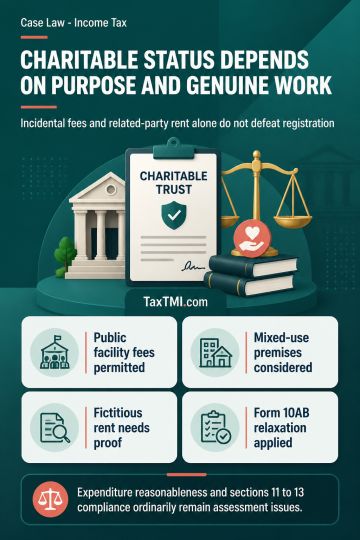
Charitable registration turns on predominant purpose and genuine activities, while incidental fees and related-party rent require supporting adverse m...
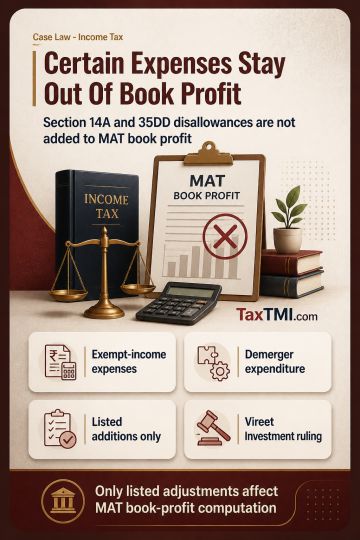
MAT book-profit adjustments exclude disallowances for exempt-income expenditure and demerger expenditure unless expressly listed under the statutory c...
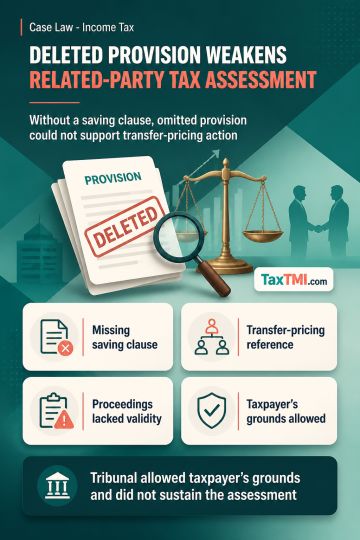
Omitted specified domestic transaction provision invalidates related-party expenditure transfer-pricing references and assessments based on consequent...
Preventive suspension requires an immediate continuing threat and cannot become indefinite without inquiry, fresh evidence, or proportionate safeguard...
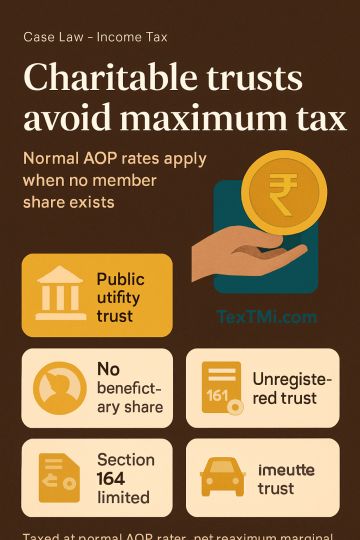
Income of a public charitable trust with objects of general public utility and no entitlement of members or trustees to any share in the income is not to be taxed at the maximum marginal rate merely because the trust is unregistered under sections 12AA/12AB and does not claim exemption under sections 11 to 13. The note states that the rule in section 164 applies to income receivable for beneficiaries with indeterminate or unknown shares and cannot be mechanically extended to every public charitable trust. Taxation should instead be at the normal rates applicable to an association of persons where no beneficiary share exists.
Income of a public charitable trust with objects of general public utility and no entitlement of members or trustees to any share in the income is not to be taxed at the maximum marginal rate merely because the trust is unregistered under sections 12AA/12AB and does not claim exemption under sections 11 to 13. The note states that the rule in section 164 applies to income receivable for beneficiaries with indeterminate or unknown shares and cannot be mechanically extended to every public charitable trust. Taxation should instead be at the normal rates applicable to an association of persons where no beneficiary share exists.
Note: It is a system-generated summary and is for quick reference only.
 TaxTMI
 of 4796








 Join Channel


 TaxTMI
