Commercial vehicle depreciation, scientifically determined warranty provisions and exempt-income disallowances were resolved in favour of the taxpayer...
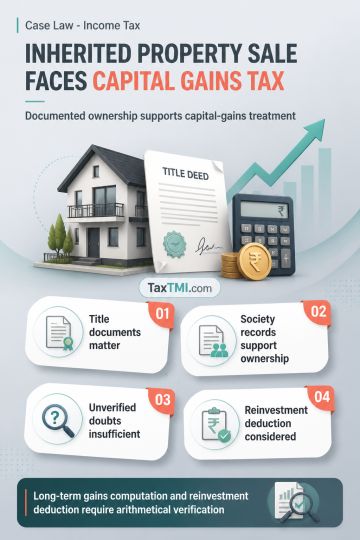
Inherited property sale proceeds require capital-gains treatment where ownership is supported by evidence, not suspicion or unverified signature doubt...
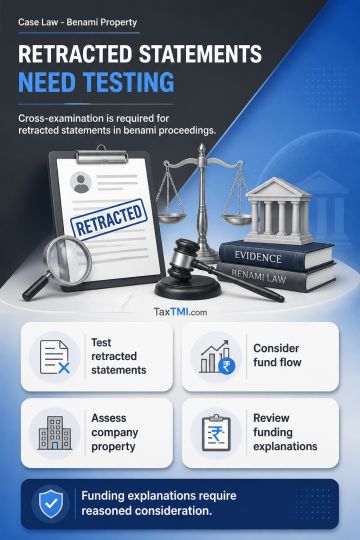
Cross-examination of retracted statements is essential where foundational evidence supports a benami allegation and documented funding explanations re...
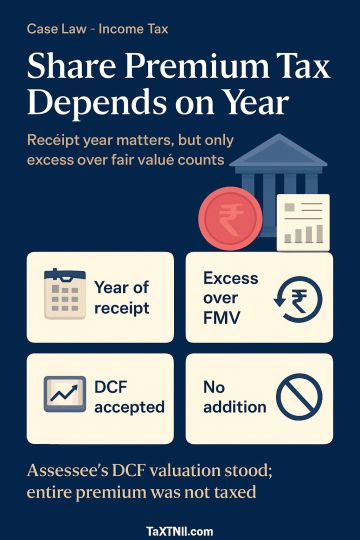
Share premium received during the relevant previous year was treated as within the scope of the anti-abuse rule even though the shares had been allotted earlier, because the trigger is receipt of consideration in excess of face value in the year of receipt. At the same time, the addition could not stand where the Assessing Officer rejected the assessee's discounted cash flow valuation without showing any defect, substituted no valid fair market value, and taxed the entire premium without proving any excess over fair market value. The Tribunal accepted the assessee's choice of valuation method and sustained no addition on that basis.
Share premium received during the relevant previous year was treated as within the scope of the anti-abuse rule even though the shares had been allotted earlier, because the trigger is receipt of consideration in excess of face value in the year of receipt. At the same time, the addition could not stand where the Assessing Officer rejected the assessee's discounted cash flow valuation without showing any defect, substituted no valid fair market value, and taxed the entire premium without proving any excess over fair market value. The Tribunal accepted the assessee's choice of valuation method and sustained no addition on that basis.
Note: It is a system-generated summary and is for quick reference only.
 TaxTMI
 of 4793








 Join Channel


 TaxTMI