Business expenditure deduction requires proof of genuine commission payments and commercial allowability; turnover growth alone cannot validate the cl...
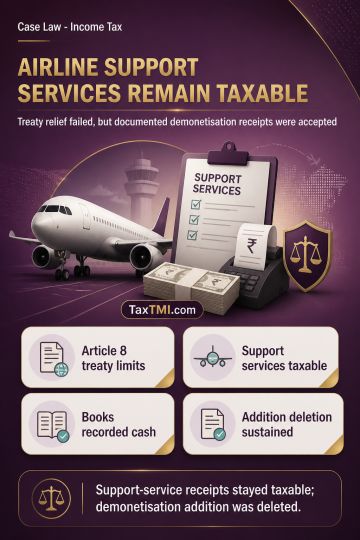
Article 8 treaty coverage excluded third-party airline support services, while documented demonetisation cash receipts remained accepted business inco...
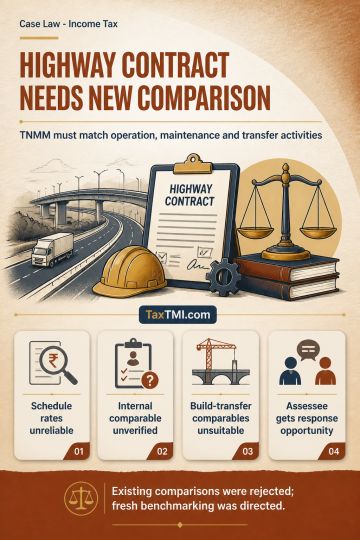
Functional comparability under TNMM requires highway contract benchmarks to reflect operation, maintenance and transfer activities, requiring fresh be...
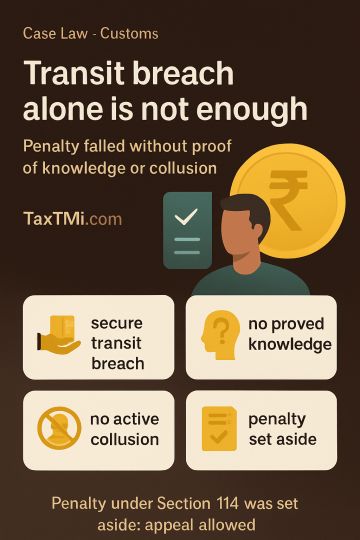
Breach of the secure transit obligation under cargo handling regulations, by itself, did not establish abetment of attempted export of prohibited goods. The essential basis for penalty under Section 114 was knowledge that the goods were liable to confiscation, or admissible evidence of active participation or positive collusion, and that evidentiary burden was not met. A mere omission in secure transport, without proof of such knowledge or abetment, was insufficient. The penalty was therefore unsustainable and was set aside, and the appeal was allowed.
Breach of the secure transit obligation under cargo handling regulations, by itself, did not establish abetment of attempted export of prohibited goods. The essential basis for penalty under Section 114 was knowledge that the goods were liable to confiscation, or admissible evidence of active participation or positive collusion, and that evidentiary burden was not met. A mere omission in secure transport, without proof of such knowledge or abetment, was insufficient. The penalty was therefore unsustainable and was set aside, and the appeal was allowed.
Note: It is a system-generated summary and is for quick reference only.
 TaxTMI
 of 4792









 Join Channel


 TaxTMI
