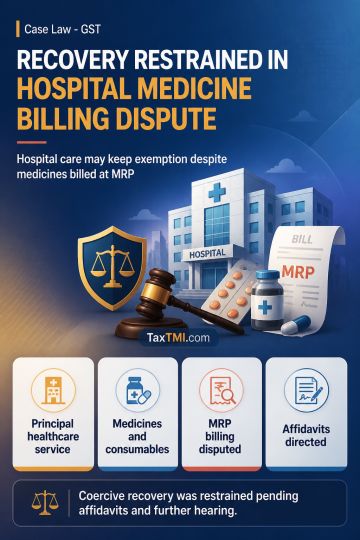
Composite inpatient healthcare supply may retain exemption despite MRP medicine billing, while separate taxable sale characterisation remains disputed...
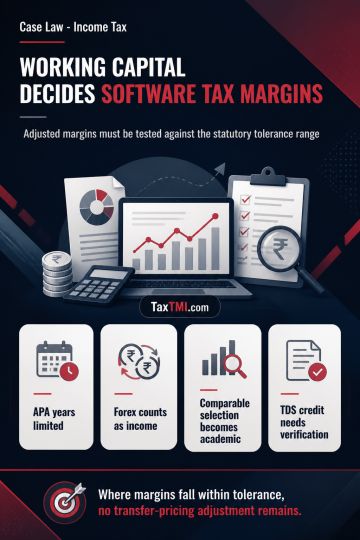
Working-capital adjustment determines whether software-services transfer-pricing margins fall within the statutory tolerance range, eliminating any ad...
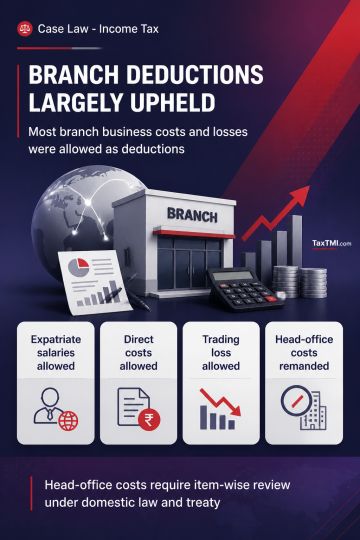
Permanent establishment deductions upheld for expatriate salaries, direct costs and trading losses, while head-office costs require fresh classificati...
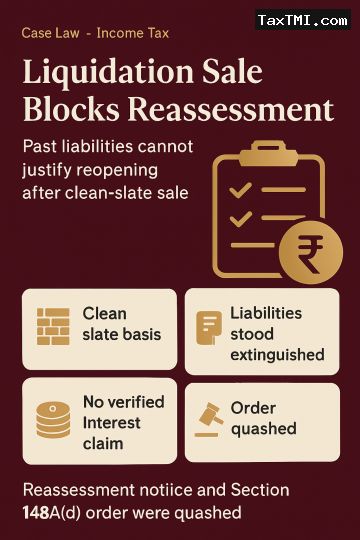
A company sold as a going concern in liquidation was treated as acquired on a clean slate basis, so past liabilities and investigations stood extinguished under the insolvency framework. The High Court applied the settled principle from insolvency sale jurisprudence and held that reopening could not proceed on that footing. It also found the reassessment to be based on an unverified assumption that interest deduction might have been claimed, despite the company's explanation that no such deduction was taken and the matter was verifiable from the accounts. As the AO acted on surmises rather than examined material, the notice and the order under Section 148A(d) were quashed.
A company sold as a going concern in liquidation was treated as acquired on a clean slate basis, so past liabilities and investigations stood extinguished under the insolvency framework. The High Court applied the settled principle from insolvency sale jurisprudence and held that reopening could not proceed on that footing. It also found the reassessment to be based on an unverified assumption that interest deduction might have been claimed, despite the company's explanation that no such deduction was taken and the matter was verifiable from the accounts. As the AO acted on surmises rather than examined material, the notice and the order under Section 148A(d) were quashed.
Note: It is a system-generated summary and is for quick reference only.
 TaxTMI
 of 4790






 Join Channel


 TaxTMI
