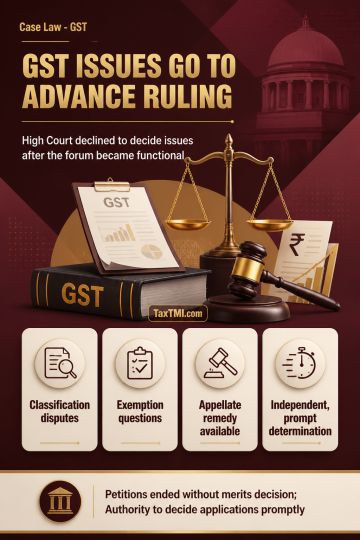
Advance-ruling mechanism governs pending GST classification, exemption and taxability disputes, limiting writ review once the specialised forum functi...
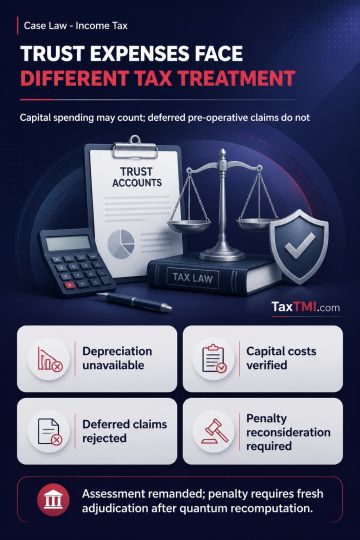
Charitable trust income application permits verified capital expenditure but rejects deferred pre-operative claims and requires reconsideration of con...
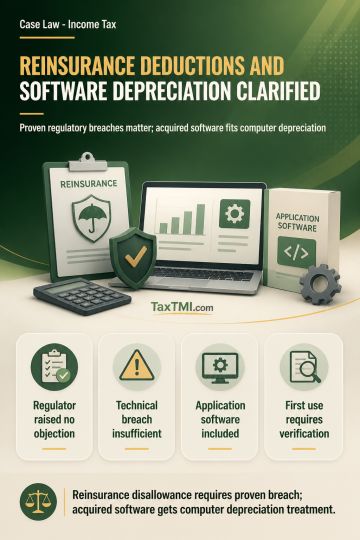
Reinsurance premium deductions require established regulatory breaches, while independently acquired software qualifies within the computer depreciati...
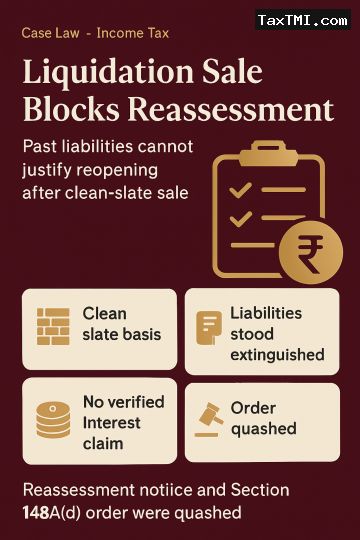
A company sold as a going concern in liquidation was treated as acquired on a clean slate basis, so past liabilities and investigations stood extinguished under the insolvency framework. The High Court applied the settled principle from insolvency sale jurisprudence and held that reopening could not proceed on that footing. It also found the reassessment to be based on an unverified assumption that interest deduction might have been claimed, despite the company's explanation that no such deduction was taken and the matter was verifiable from the accounts. As the AO acted on surmises rather than examined material, the notice and the order under Section 148A(d) were quashed.
A company sold as a going concern in liquidation was treated as acquired on a clean slate basis, so past liabilities and investigations stood extinguished under the insolvency framework. The High Court applied the settled principle from insolvency sale jurisprudence and held that reopening could not proceed on that footing. It also found the reassessment to be based on an unverified assumption that interest deduction might have been claimed, despite the company's explanation that no such deduction was taken and the matter was verifiable from the accounts. As the AO acted on surmises rather than examined material, the notice and the order under Section 148A(d) were quashed.
Note: It is a system-generated summary and is for quick reference only.
 TaxTMI
 of 4792







 Join Channel


 TaxTMI