Tax exemption for regulatory authority income applies retrospectively, subject to non-commercial activity, unchanged income sources, and return filing...
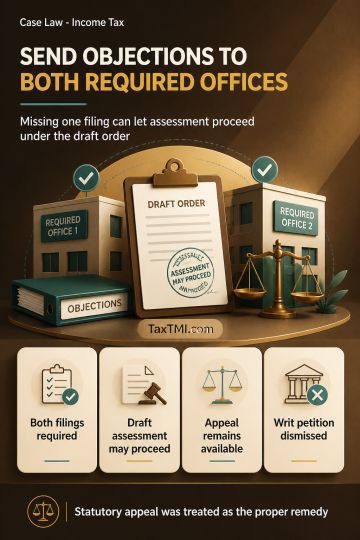
Dispute Resolution Panel objections must reach both prescribed forums; otherwise assessment may proceed and statutory appeal remains the proper remedy...
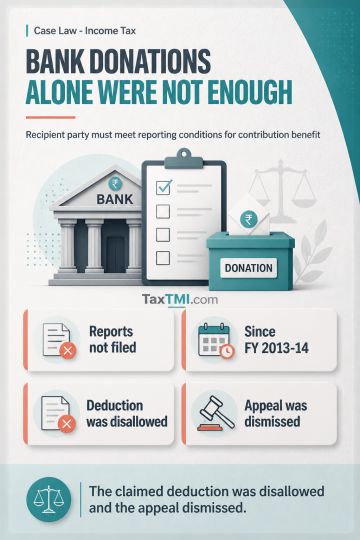
Political contribution deductions require recipient party compliance with contribution-reporting conditions; banking-channel donations alone do not qu...
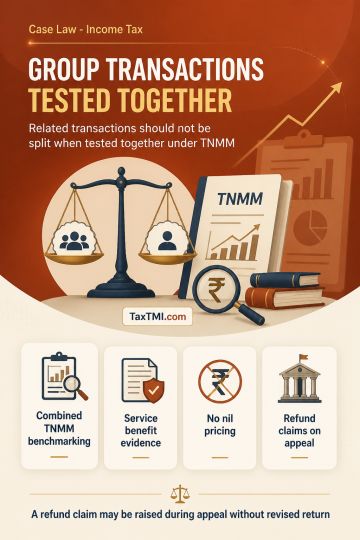
Aggregation under TNMM prevents selective testing of intra-group services without comparable uncontrolled transactions, while appellate additional cla...
Protective assessment cannot duplicate identical receipts under competing characterisations; remote services did not establish a taxable permanent est...
Page of 4792
Press 'Enter' after typing page number.
461 to 480 of 95833 Results
❮
❯
❯❯
0 / 200
Expand Note
Add to Folder
No Folders have been created
+
Are you sure you want to delete "My most important" ?
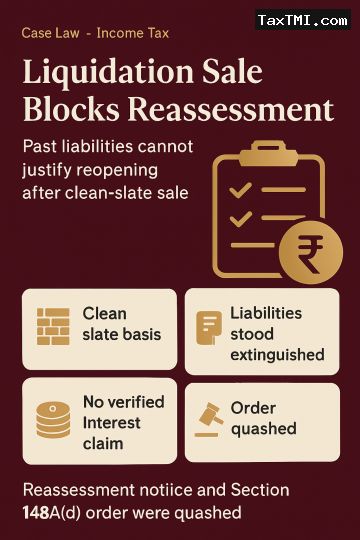
A company sold as a going concern in liquidation was treated as acquired on a clean slate basis, so past liabilities and investigations stood extinguished under the insolvency framework. The High Court applied the settled principle from insolvency sale jurisprudence and held that reopening could not proceed on that footing. It also found the reassessment to be based on an unverified assumption that interest deduction might have been claimed, despite the company's explanation that no such deduction was taken and the matter was verifiable from the accounts. As the AO acted on surmises rather than examined material, the notice and the order under Section 148A(d) were quashed.
A company sold as a going concern in liquidation was treated as acquired on a clean slate basis, so past liabilities and investigations stood extinguished under the insolvency framework. The High Court applied the settled principle from insolvency sale jurisprudence and held that reopening could not proceed on that footing. It also found the reassessment to be based on an unverified assumption that interest deduction might have been claimed, despite the company's explanation that no such deduction was taken and the matter was verifiable from the accounts. As the AO acted on surmises rather than examined material, the notice and the order under Section 148A(d) were quashed.
Note: It is a system-generated summary and is for quick reference only.
 TaxTMI
 of 4792










 Join Channel


 TaxTMI