Retrospective cancellation of charitable registration under section 12AB(4) was unsustainable; related-party benefit allegations did not prove nongenu...
Merger control notice and disclosure rules: Supreme Court limits penalties, rejects reopening of approved combination, and sets aside adverse findings...
Page of 4805
Press 'Enter' after typing page number.
2701 to 2720 of 96100 Results
❮
❯
❯❯
0 / 200
Expand Note
Add to Folder
No Folders have been created
+
Are you sure you want to delete "My most important" ?
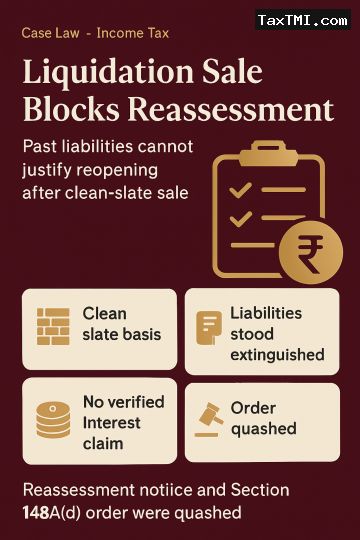
A company sold as a going concern in liquidation was treated as acquired on a clean slate basis, so past liabilities and investigations stood extinguished under the insolvency framework. The High Court applied the settled principle from insolvency sale jurisprudence and held that reopening could not proceed on that footing. It also found the reassessment to be based on an unverified assumption that interest deduction might have been claimed, despite the company's explanation that no such deduction was taken and the matter was verifiable from the accounts. As the AO acted on surmises rather than examined material, the notice and the order under Section 148A(d) were quashed.
A company sold as a going concern in liquidation was treated as acquired on a clean slate basis, so past liabilities and investigations stood extinguished under the insolvency framework. The High Court applied the settled principle from insolvency sale jurisprudence and held that reopening could not proceed on that footing. It also found the reassessment to be based on an unverified assumption that interest deduction might have been claimed, despite the company's explanation that no such deduction was taken and the matter was verifiable from the accounts. As the AO acted on surmises rather than examined material, the notice and the order under Section 148A(d) were quashed.
Note: It is a system-generated summary and is for quick reference only.
 TaxTMI
 of 4805


 Join Channel


 TaxTMI
