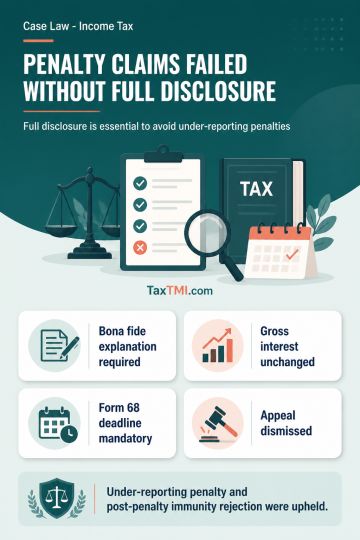
Bona fide disclosure requirements govern under-reporting penalties, and post-penalty immunity applications cannot secure available statutory protectio...
Certificate-of-origin verification procedure governs preferential customs benefits; denial without retroactive verification was set aside with consequ...
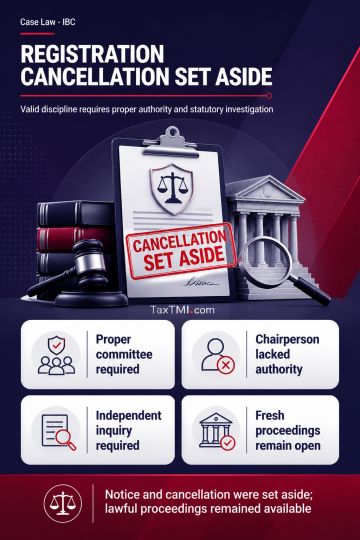
Disciplinary Committee jurisdiction and mandatory investigation requirements invalidated cancellation of an insolvency professional's registration and...
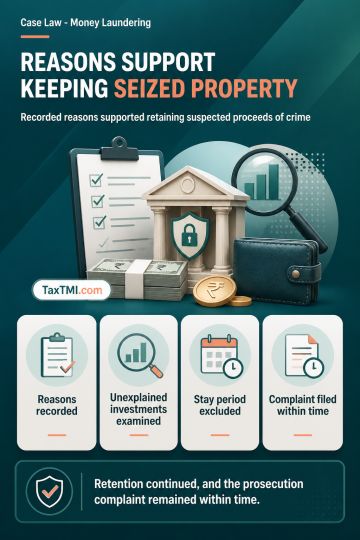
Retention of seized property survives where recorded reasons support proceeds of crime, while stayed investigation periods are excluded from limitatio...
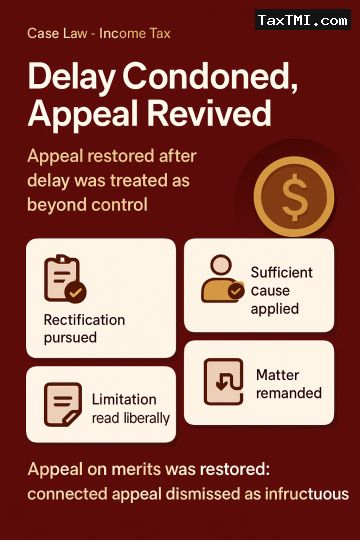
Delay in filing the appeal against the intimation under section 143(1) was condoned because the assessee had pursued rectification and a reminder, and the time taken in that process was treated as beyond its control. Applying the principle of sufficient cause, the Tribunal held that limitation provisions should be construed liberally to advance substantial justice where there is no negligence, inaction or lack of bona fides. The order dismissing the appeal on limitation was set aside and the matter was restored for decision on merits. The connected appeal against the rectification order was dismissed as infructuous after restoration of the main appeal.
Delay in filing the appeal against the intimation under section 143(1) was condoned because the assessee had pursued rectification and a reminder, and the time taken in that process was treated as beyond its control. Applying the principle of sufficient cause, the Tribunal held that limitation provisions should be construed liberally to advance substantial justice where there is no negligence, inaction or lack of bona fides. The order dismissing the appeal on limitation was set aside and the matter was restored for decision on merits. The connected appeal against the rectification order was dismissed as infructuous after restoration of the main appeal.
Note: It is a system-generated summary and is for quick reference only.
 TaxTMI
 of 4786









 Join Channel


 TaxTMI