Institutional incapacity in customs settlement proceedings excludes non-functional quorum periods from statutory disposal timelines, preventing automa...
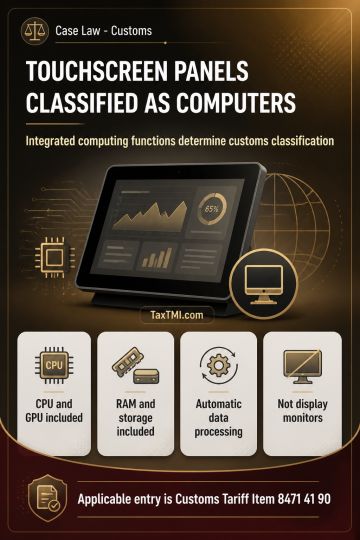
Interactive touchscreen panels with integrated computing functions fall under automatic data-processing machines rather than display monitors for cust...
Ex parte injunction service requirements were substantially met, while civil recovery and SFIO investigation into provident fund defalcation continued...
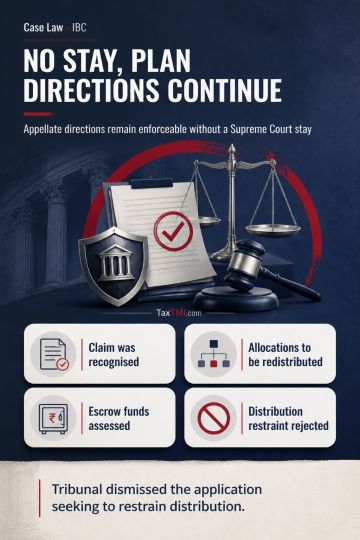
Enforcement of resolution-plan directions continues without a Supreme Court stay, preventing suspension of redistribution and escrowed-fund distributi...
Third-party ownership claims over attached property require Special Court adjudication where purchasers lack registered sale deeds and bona fides rema...
Pure-agent reimbursements in clearing and forwarding services are excluded from taxable value when qualifying third-party payments are properly record...
Customs relief for Strait of Hormuz maritime disruptions remains available, with existing conditions continuing unchanged through the extended validit...
Employee benefit expenses were not to be disallowed merely because managerial remuneration increased while revenue declined, where the expenditure was genuine, business-related and supported by material showing services rendered. The reasonableness of remuneration had to be judged from the businessman's perspective, not on the Assessing Officer's subjective view, and the Rule 46A objection failed because the relied-on documents were not treated as additional evidence requiring remand. On transfer pricing, interest on rupee-denominated non-convertible debentures was benchmarked against the Prime Lending Rate, not EBLR; on that basis the coupon rate was treated as arm's length and the adjustment was deleted.
Employee benefit expenses were not to be disallowed merely because managerial remuneration increased while revenue declined, where the expenditure was genuine, business-related and supported by material showing services rendered. The reasonableness of remuneration had to be judged from the businessman's perspective, not on the Assessing Officer's subjective view, and the Rule 46A objection failed because the relied-on documents were not treated as additional evidence requiring remand. On transfer pricing, interest on rupee-denominated non-convertible debentures was benchmarked against the Prime Lending Rate, not EBLR; on that basis the coupon rate was treated as arm's length and the adjustment was deleted.
Note: It is a system-generated summary and is for quick reference only.
 TaxTMI
 of 4794



















 Join Channel



 TaxTMI