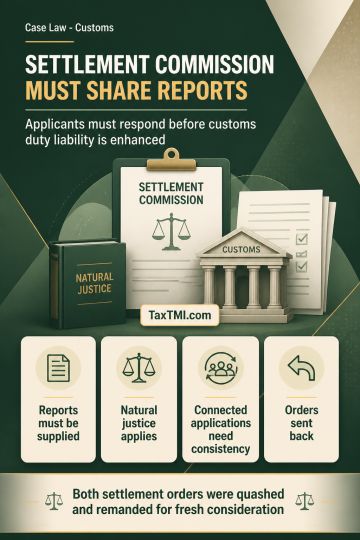
Opportunity to respond to jurisdictional reports is mandatory before customs settlement duty enhancement; connected applications require consistent ad...
Specific customs headings for scaffolding components prevail over general classification, invalidating misclassification proceedings and enabling with...
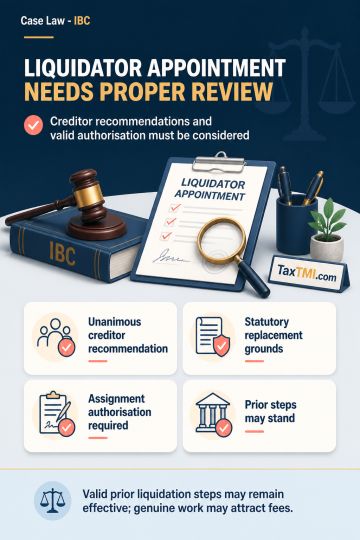
Liquidator appointment under Section 34 requires consideration of creditor recommendations, valid professional authorisation, and preservation of vali...
A corporate debtor remains a separate juristic person even where it forms part of a group, and Regulation 29 of the Liquidation Process Regulations permits set-off only for mutual dealings between the corporate debtor and the same counterparty. The Tribunal rejected cross-entity aggregation of claims through the Group of Companies Doctrine, noting that each BISCON entity had undergone separate CIRP or liquidation and had separate billing and deposits. The appellant had also filed separate claims and disclosed no mutual set-off in the present proceeding. The liquidator was therefore entitled to recover the refundable balance as part of the liquidation estate, and the appeal was dismissed.
A corporate debtor remains a separate juristic person even where it forms part of a group, and Regulation 29 of the Liquidation Process Regulations permits set-off only for mutual dealings between the corporate debtor and the same counterparty. The Tribunal rejected cross-entity aggregation of claims through the Group of Companies Doctrine, noting that each BISCON entity had undergone separate CIRP or liquidation and had separate billing and deposits. The appellant had also filed separate claims and disclosed no mutual set-off in the present proceeding. The liquidator was therefore entitled to recover the refundable balance as part of the liquidation estate, and the appeal was dismissed.
Note: It is a system-generated summary and is for quick reference only.
 TaxTMI
 of 4792











 Join Channel



 TaxTMI