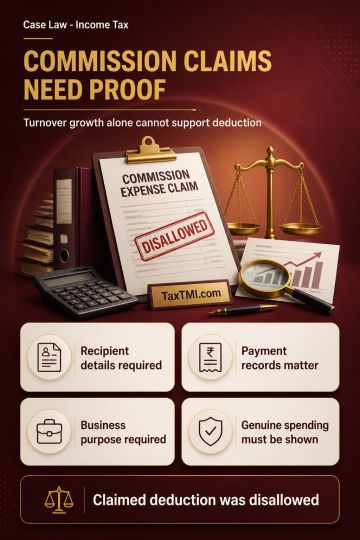
Business expenditure deduction requires proof of genuine commission payments and commercial allowability; turnover growth alone cannot validate the cl...
Article 8 treaty coverage excluded third-party airline support services, while documented demonetisation cash receipts remained accepted business inco...
Functional comparability under TNMM requires highway contract benchmarks to reflect operation, maintenance and transfer activities, requiring fresh be...
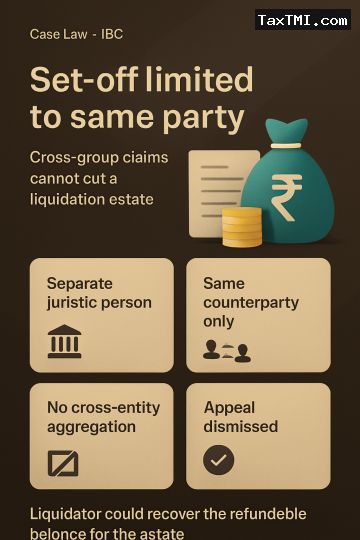
A corporate debtor remains a separate juristic person even where it forms part of a group, and Regulation 29 of the Liquidation Process Regulations permits set-off only for mutual dealings between the corporate debtor and the same counterparty. The Tribunal rejected cross-entity aggregation of claims through the Group of Companies Doctrine, noting that each BISCON entity had undergone separate CIRP or liquidation and had separate billing and deposits. The appellant had also filed separate claims and disclosed no mutual set-off in the present proceeding. The liquidator was therefore entitled to recover the refundable balance as part of the liquidation estate, and the appeal was dismissed.
A corporate debtor remains a separate juristic person even where it forms part of a group, and Regulation 29 of the Liquidation Process Regulations permits set-off only for mutual dealings between the corporate debtor and the same counterparty. The Tribunal rejected cross-entity aggregation of claims through the Group of Companies Doctrine, noting that each BISCON entity had undergone separate CIRP or liquidation and had separate billing and deposits. The appellant had also filed separate claims and disclosed no mutual set-off in the present proceeding. The liquidator was therefore entitled to recover the refundable balance as part of the liquidation estate, and the appeal was dismissed.
Note: It is a system-generated summary and is for quick reference only.
 TaxTMI
 of 4792








 Join Channel


 TaxTMI
