Transaction value rejection requires reliable corroboration; refundable VAT is excluded and temporary registration does not defeat new-vehicle exempti...
Appellate jurisdiction remains available where a wrist-worn gold ornament cannot conclusively be characterised as imported baggage at the preliminary ...
Written complaint requirement bars cognizance on police reports for securities offences, while unsupported breach of trust and cheating allegations fa...
Risk-based postal import clearance standardises electronic assessment, document requests, duty realisation and delivery controls at Foreign Post Offic...
Page of 4794
Press 'Enter' after typing page number.
221 to 240 of 95875 Results
❮
❯
❯❯
0 / 200
Expand Note
Add to Folder
No Folders have been created
+
Are you sure you want to delete "My most important" ?
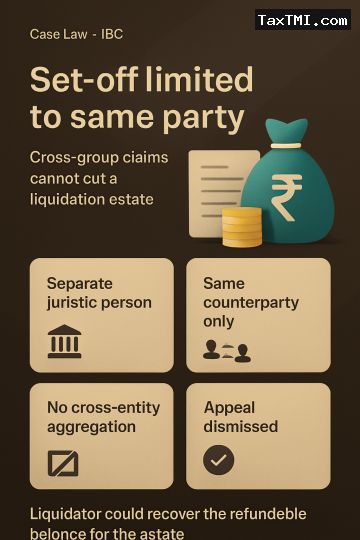
A corporate debtor remains a separate juristic person even where it forms part of a group, and Regulation 29 of the Liquidation Process Regulations permits set-off only for mutual dealings between the corporate debtor and the same counterparty. The Tribunal rejected cross-entity aggregation of claims through the Group of Companies Doctrine, noting that each BISCON entity had undergone separate CIRP or liquidation and had separate billing and deposits. The appellant had also filed separate claims and disclosed no mutual set-off in the present proceeding. The liquidator was therefore entitled to recover the refundable balance as part of the liquidation estate, and the appeal was dismissed.
A corporate debtor remains a separate juristic person even where it forms part of a group, and Regulation 29 of the Liquidation Process Regulations permits set-off only for mutual dealings between the corporate debtor and the same counterparty. The Tribunal rejected cross-entity aggregation of claims through the Group of Companies Doctrine, noting that each BISCON entity had undergone separate CIRP or liquidation and had separate billing and deposits. The appellant had also filed separate claims and disclosed no mutual set-off in the present proceeding. The liquidator was therefore entitled to recover the refundable balance as part of the liquidation estate, and the appeal was dismissed.
Note: It is a system-generated summary and is for quick reference only.
 TaxTMI
 of 4794







 Join Channel


 TaxTMI