Transfer pricing requires evidence for AMP transactions, functionally reliable comparables, and appropriate aggregation or Berry Ratio benchmarking me...
Revisionary jurisdiction cannot reopen share capital assessments where adequate inquiry supports a permissible view and no independent error is establ...
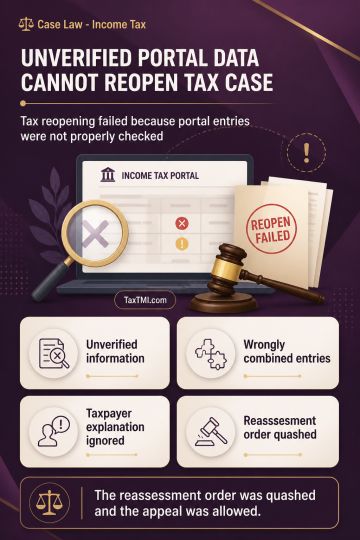
Reassessment jurisdiction fails where unverified portal information is aggregated without examining the taxpayer's explanation or relevance of entries...
Statutory sanction for delayed reassessment requires approval from the prescribed authority; approval by an inferior authority invalidates jurisdictio...
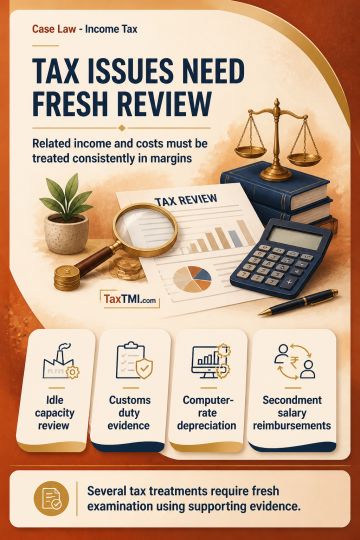
Transfer pricing margin adjustments require matching treatment of non-operating income and related costs, with comparability issues reconsidered on ev...
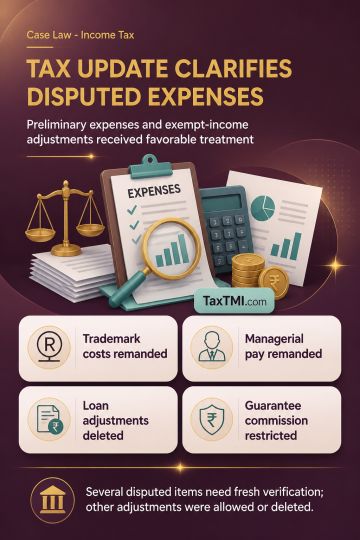
Preliminary-expense amortisation and MAT exempt-income adjustments prevailed, while trademark costs and managerial remuneration require fresh verifica...
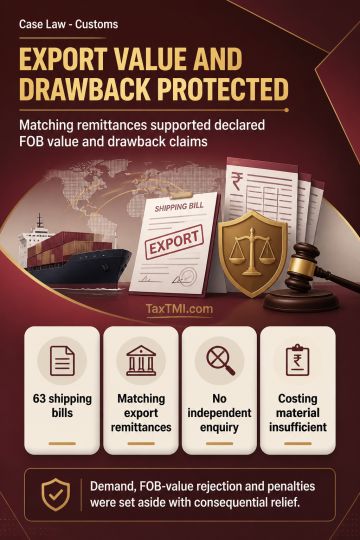
Export valuation requires contemporaneous evidence; unrelated invoices cannot prove overvaluation, and dual penalties on firm and partner are impermis...
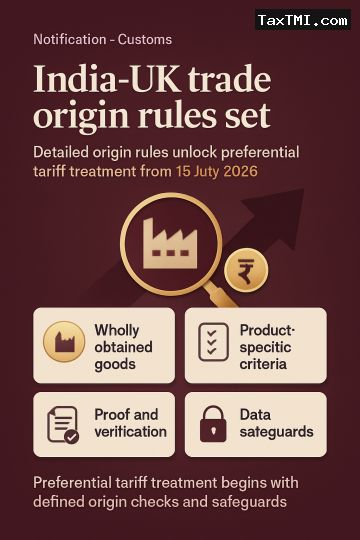
The Customs Tariff (Determination of Origin of Goods under the India-UK Comprehensive Economic and Trade Agreement) Rules, 2026 establish the origin framework for preferential tariff treatment from 15 July 2026. They define originating goods through wholly obtained status, production from originating materials, or compliance with product-specific rules in Annexure-A, and set methods for valuation, qualifying value content, cumulation, tolerance, non-alteration, proof of origin, verification, record-keeping, penalties and temporary suspension. The rules also prescribe origin declarations, certificates of origin, retrospective completion, low-value exemptions for the UK, and detailed customs verification procedures. Annexures provide product-specific origin rules, declaration templates, authentication through electronic exchange, and data protection safeguards for personal information shared for origin authentication.
The Customs Tariff (Determination of Origin of Goods under the India-UK Comprehensive Economic and Trade Agreement) Rules, 2026 establish the origin framework for preferential tariff treatment from 15 July 2026. They define originating goods through wholly obtained status, production from originating materials, or compliance with product-specific rules in Annexure-A, and set methods for valuation, qualifying value content, cumulation, tolerance, non-alteration, proof of origin, verification, record-keeping, penalties and temporary suspension. The rules also prescribe origin declarations, certificates of origin, retrospective completion, low-value exemptions for the UK, and detailed customs verification procedures. Annexures provide product-specific origin rules, declaration templates, authentication through electronic exchange, and data protection safeguards for personal information shared for origin authentication.
Note: It is a system-generated summary and is for quick reference only.
 TaxTMI
 of 4798












 Join Channel


 TaxTMI
