Tax exemption for regulatory authority income applies retrospectively, subject to non-commercial activity, unchanged income sources, and return filing...
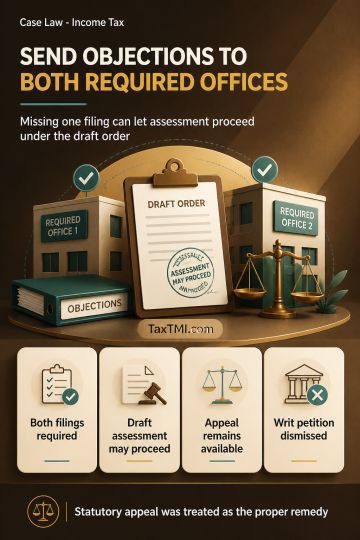
Dispute Resolution Panel objections must reach both prescribed forums; otherwise assessment may proceed and statutory appeal remains the proper remedy...
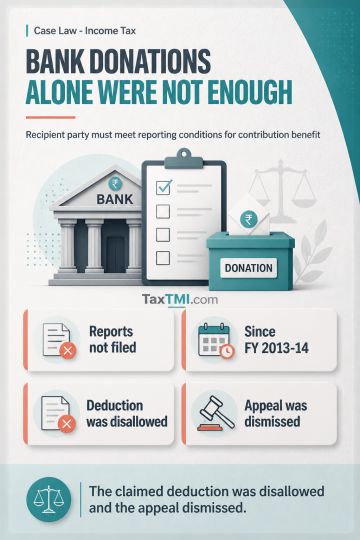
Political contribution deductions require recipient party compliance with contribution-reporting conditions; banking-channel donations alone do not qu...
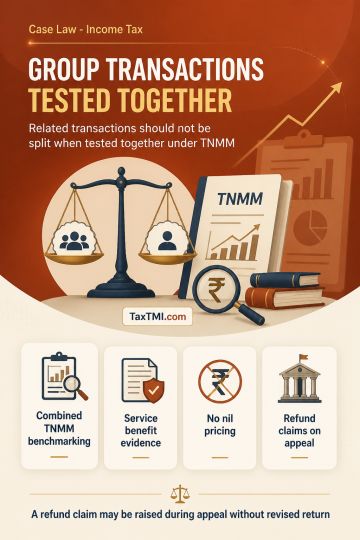
Aggregation under TNMM prevents selective testing of intra-group services without comparable uncontrolled transactions, while appellate additional cla...
Protective assessment cannot duplicate identical receipts under competing characterisations; remote services did not establish a taxable permanent est...
Page of 4792
Press 'Enter' after typing page number.
461 to 480 of 95833 Results
❮
❯
❯❯
0 / 200
Expand Note
Add to Folder
No Folders have been created
+
Are you sure you want to delete "My most important" ?
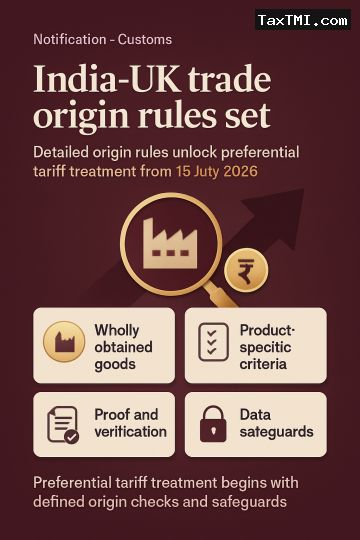
The Customs Tariff (Determination of Origin of Goods under the India-UK Comprehensive Economic and Trade Agreement) Rules, 2026 establish the origin framework for preferential tariff treatment from 15 July 2026. They define originating goods through wholly obtained status, production from originating materials, or compliance with product-specific rules in Annexure-A, and set methods for valuation, qualifying value content, cumulation, tolerance, non-alteration, proof of origin, verification, record-keeping, penalties and temporary suspension. The rules also prescribe origin declarations, certificates of origin, retrospective completion, low-value exemptions for the UK, and detailed customs verification procedures. Annexures provide product-specific origin rules, declaration templates, authentication through electronic exchange, and data protection safeguards for personal information shared for origin authentication.
The Customs Tariff (Determination of Origin of Goods under the India-UK Comprehensive Economic and Trade Agreement) Rules, 2026 establish the origin framework for preferential tariff treatment from 15 July 2026. They define originating goods through wholly obtained status, production from originating materials, or compliance with product-specific rules in Annexure-A, and set methods for valuation, qualifying value content, cumulation, tolerance, non-alteration, proof of origin, verification, record-keeping, penalties and temporary suspension. The rules also prescribe origin declarations, certificates of origin, retrospective completion, low-value exemptions for the UK, and detailed customs verification procedures. Annexures provide product-specific origin rules, declaration templates, authentication through electronic exchange, and data protection safeguards for personal information shared for origin authentication.
Note: It is a system-generated summary and is for quick reference only.
 TaxTMI
 of 4792






 Join Channel


 TaxTMI