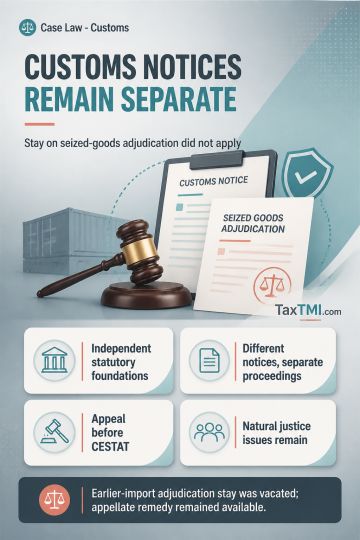
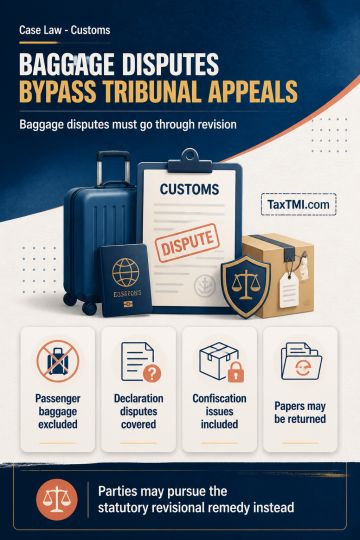
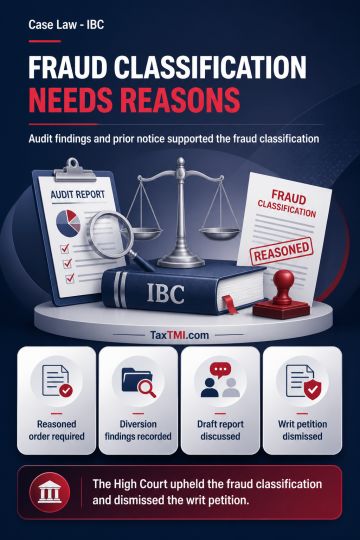
Independent show-cause notices remain separate proceedings, while customs adjudication challenges should ordinarily follow the statutory appellate rem...
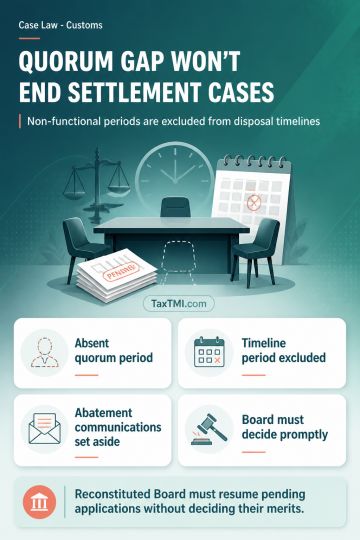
Institutional incapacity in customs settlement proceedings excludes non-functional quorum periods from statutory disposal timelines, preventing automa...
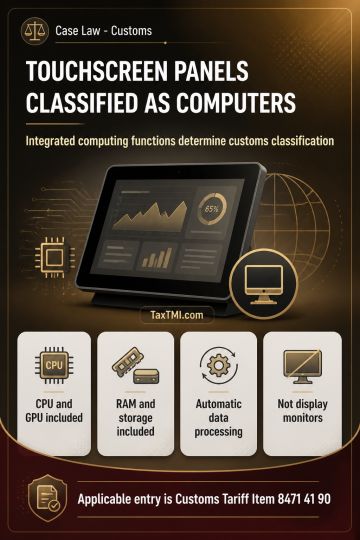
Interactive touchscreen panels with integrated computing functions fall under automatic data-processing machines rather than display monitors for cust...
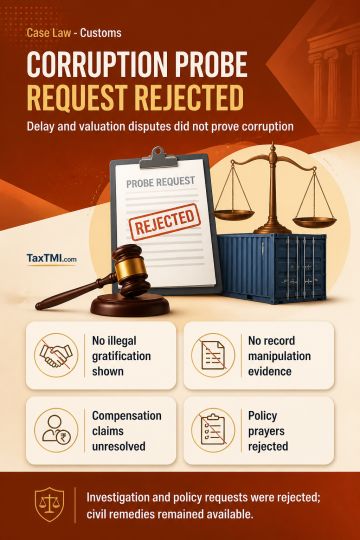
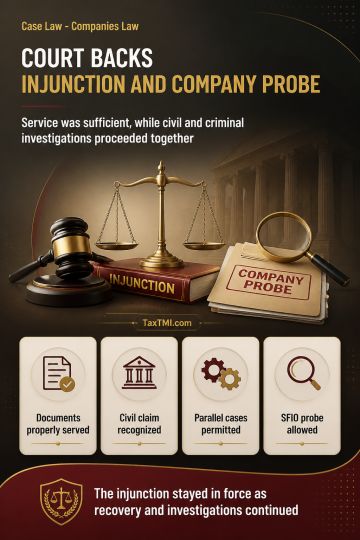
Ex parte injunction service requirements were substantially met, while civil recovery and SFIO investigation into provident fund defalcation continued...
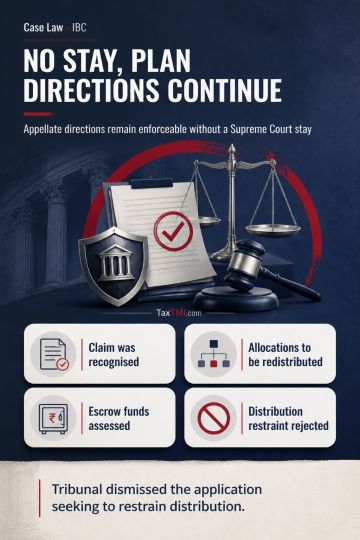
Enforcement of resolution-plan directions continues without a Supreme Court stay, preventing suspension of redistribution and escrowed-fund distributi...
Third-party ownership claims over attached property require Special Court adjudication where purchasers lack registered sale deeds and bona fides rema...
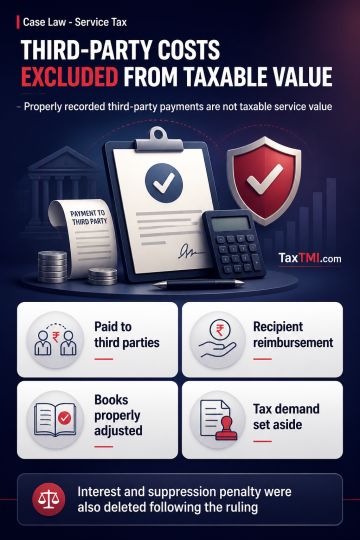
Pure-agent reimbursements in clearing and forwarding services are excluded from taxable value when qualifying third-party payments are properly record...
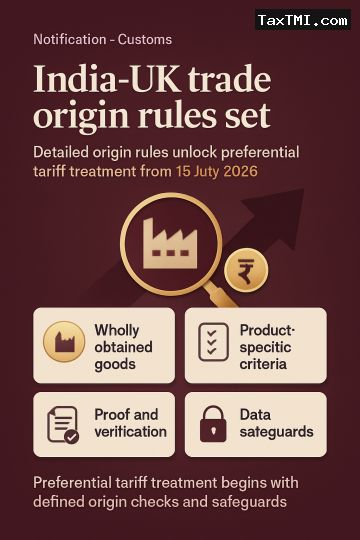
The Customs Tariff (Determination of Origin of Goods under the India-UK Comprehensive Economic and Trade Agreement) Rules, 2026 establish the origin framework for preferential tariff treatment from 15 July 2026. They define originating goods through wholly obtained status, production from originating materials, or compliance with product-specific rules in Annexure-A, and set methods for valuation, qualifying value content, cumulation, tolerance, non-alteration, proof of origin, verification, record-keeping, penalties and temporary suspension. The rules also prescribe origin declarations, certificates of origin, retrospective completion, low-value exemptions for the UK, and detailed customs verification procedures. Annexures provide product-specific origin rules, declaration templates, authentication through electronic exchange, and data protection safeguards for personal information shared for origin authentication.
The Customs Tariff (Determination of Origin of Goods under the India-UK Comprehensive Economic and Trade Agreement) Rules, 2026 establish the origin framework for preferential tariff treatment from 15 July 2026. They define originating goods through wholly obtained status, production from originating materials, or compliance with product-specific rules in Annexure-A, and set methods for valuation, qualifying value content, cumulation, tolerance, non-alteration, proof of origin, verification, record-keeping, penalties and temporary suspension. The rules also prescribe origin declarations, certificates of origin, retrospective completion, low-value exemptions for the UK, and detailed customs verification procedures. Annexures provide product-specific origin rules, declaration templates, authentication through electronic exchange, and data protection safeguards for personal information shared for origin authentication.
Note: It is a system-generated summary and is for quick reference only.
 TaxTMI
 of 4794







 Join Channel


 TaxTMI
