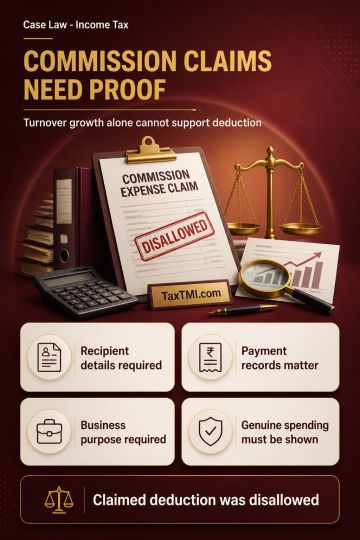
Business expenditure deduction requires proof of genuine commission payments and commercial allowability; turnover growth alone cannot validate the cl...
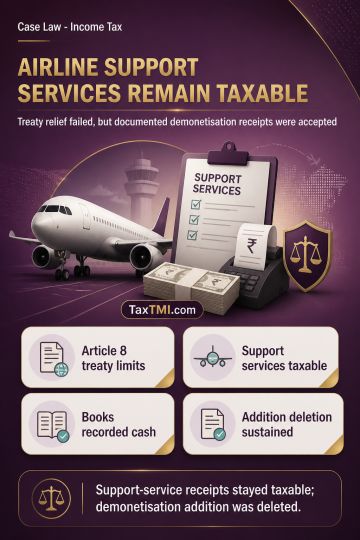
Article 8 treaty coverage excluded third-party airline support services, while documented demonetisation cash receipts remained accepted business inco...
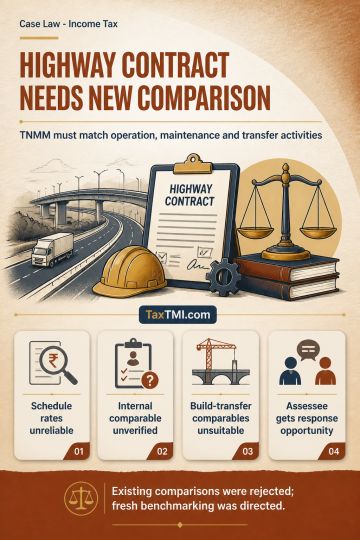
Functional comparability under TNMM requires highway contract benchmarks to reflect operation, maintenance and transfer activities, requiring fresh be...
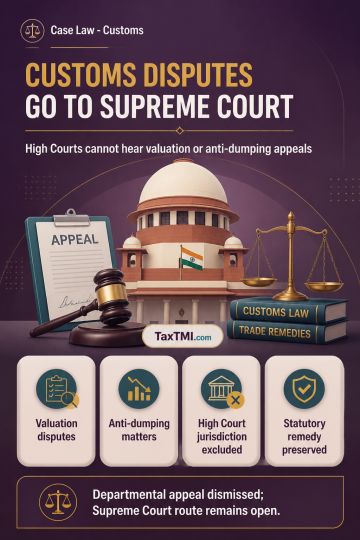
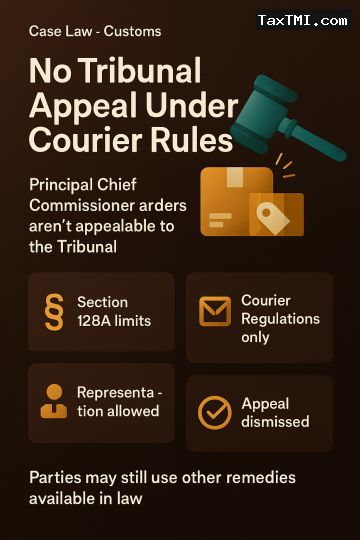
Section 129A of the Customs Act does not create a Tribunal appeal where the underlying statute does not provide one. In the context of the Courier Imports and Exports (Electronic Declaration and Processing) Regulations, 2010, the Tribunal noted that those Regulations allow a representation to the Chief Commissioner against an order under regulation 13(1), but do not provide a further appeal against the order passed in such proceedings. It also accepted that such orders are not decisions under the Customs Act for section 129A purposes. The appeal against the Principal Chief Commissioner's order on forfeiture of security and penalty was therefore dismissed as not maintainable, with liberty to pursue any other remedy available in law.
Section 129A of the Customs Act does not create a Tribunal appeal where the underlying statute does not provide one. In the context of the Courier Imports and Exports (Electronic Declaration and Processing) Regulations, 2010, the Tribunal noted that those Regulations allow a representation to the Chief Commissioner against an order under regulation 13(1), but do not provide a further appeal against the order passed in such proceedings. It also accepted that such orders are not decisions under the Customs Act for section 129A purposes. The appeal against the Principal Chief Commissioner's order on forfeiture of security and penalty was therefore dismissed as not maintainable, with liberty to pursue any other remedy available in law.
Note: It is a system-generated summary and is for quick reference only.
 TaxTMI
 of 4793



 Join Channel


 TaxTMI
