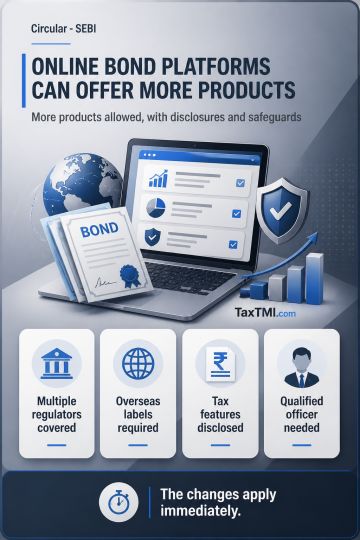
Online bond platforms may offer overseas-regulated products and tax-specific bonds subject to disclosures, compliance safeguards and revised complianc...
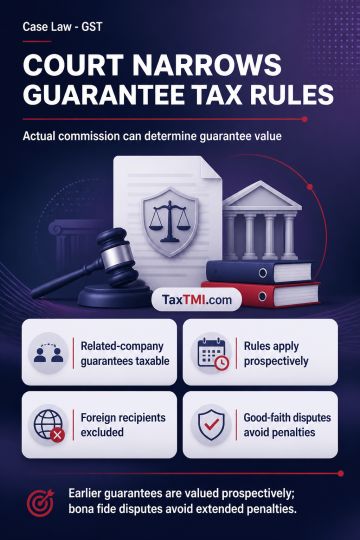
Corporate guarantee valuation permits actual ascertainable commission while barring retroactive application and extended-period penalties for bona fid...
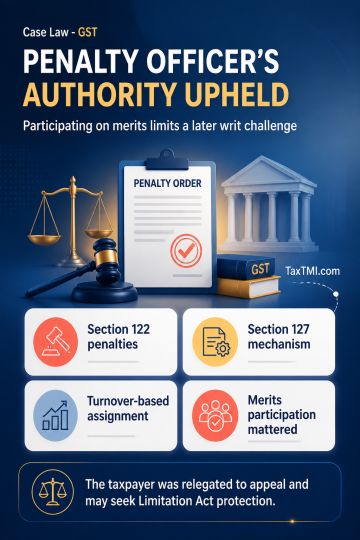
Proper-officer jurisdiction under UPGST penalty provisions upheld; participation on merits prevents bypassing the statutory appellate remedy through w...
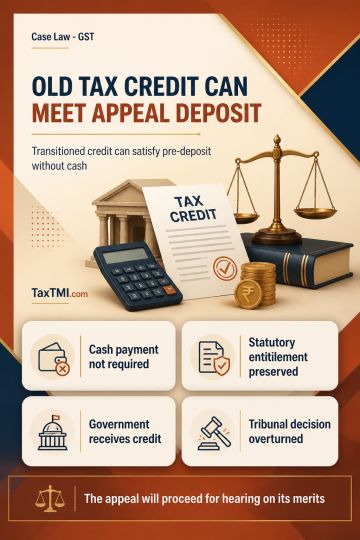
Transitioned CENVAT credit may validly satisfy mandatory pre-deposit requirements for legacy service tax appeals through Electronic Credit Ledger debi...
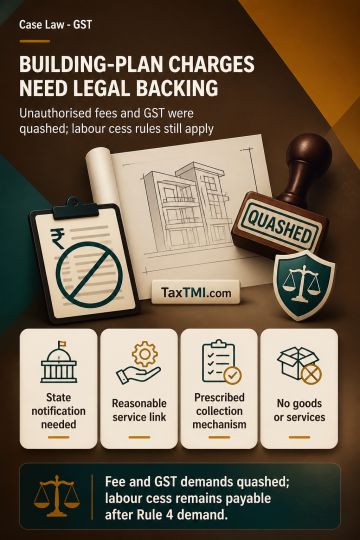
Building-plan sanction charges require statutory authority; unauthorised fees and GST were quashed, while labour cess must follow prescribed collectio...
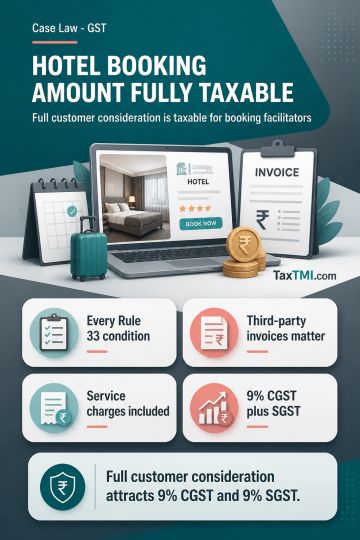
Pure-agent exclusion fails where hotel booking facilitators receive third-party services themselves, making entire customer consideration taxable as r...
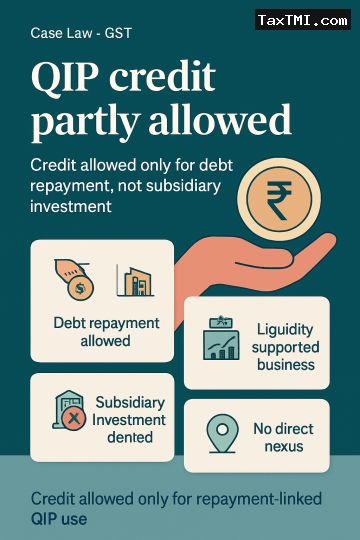
Input tax credit on QIP-related services was held admissible only to the extent the funds were used for repayment or pre-payment of borrowings, because that deployment was treated as business-related and incidental to operations under Section 16(1). The authority linked the tax credit test to the actual use of the QIP proceeds, finding a sufficient nexus where the funds reduced financial liabilities, improved liquidity, and supported business activity. By contrast, credit was denied on the portion used to invest in a wholly owned subsidiary, because the investment was an acquisition of securities by a distinct legal entity and did not create the direct nexus required with the appellant's own business.
Input tax credit on QIP-related services was held admissible only to the extent the funds were used for repayment or pre-payment of borrowings, because that deployment was treated as business-related and incidental to operations under Section 16(1). The authority linked the tax credit test to the actual use of the QIP proceeds, finding a sufficient nexus where the funds reduced financial liabilities, improved liquidity, and supported business activity. By contrast, credit was denied on the portion used to invest in a wholly owned subsidiary, because the investment was an acquisition of securities by a distinct legal entity and did not create the direct nexus required with the appellant's own business.
Note: It is a system-generated summary and is for quick reference only.
 TaxTMI
 of 4798







 Join Channel


 TaxTMI
