Development agreements require legal possession or effective enjoyment for capital gains transfer; permissive possession and deferred consideration de...
Prolonged sterilisation of development rights supports capital-gains treatment, while business-income disallowances cannot govern capital-gains comput...
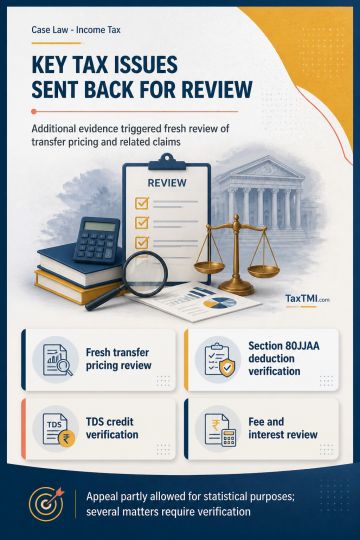
Additional evidence in transfer pricing dispute leads to fresh examination, while tax deductions, TDS credit, fee and refund interest require verifica...
Category II AIF pass-through taxation preserves non-business income character; investment receipts cannot be reclassified without applying recognised ...
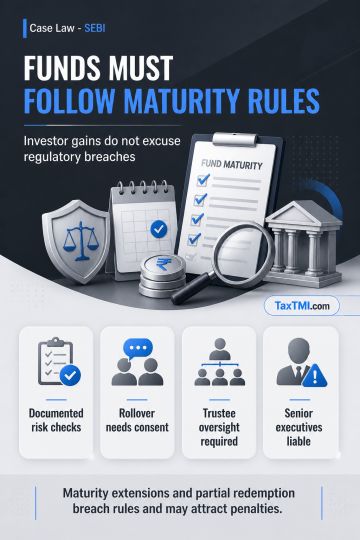
Mutual fund maturity rules require proper rollover, redemption, disclosure, and due diligence; investor gains cannot excuse regulatory breaches or pen...
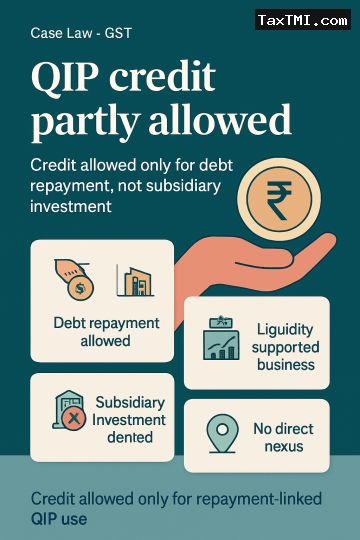
Input tax credit on QIP-related services was held admissible only to the extent the funds were used for repayment or pre-payment of borrowings, because that deployment was treated as business-related and incidental to operations under Section 16(1). The authority linked the tax credit test to the actual use of the QIP proceeds, finding a sufficient nexus where the funds reduced financial liabilities, improved liquidity, and supported business activity. By contrast, credit was denied on the portion used to invest in a wholly owned subsidiary, because the investment was an acquisition of securities by a distinct legal entity and did not create the direct nexus required with the appellant's own business.
Input tax credit on QIP-related services was held admissible only to the extent the funds were used for repayment or pre-payment of borrowings, because that deployment was treated as business-related and incidental to operations under Section 16(1). The authority linked the tax credit test to the actual use of the QIP proceeds, finding a sufficient nexus where the funds reduced financial liabilities, improved liquidity, and supported business activity. By contrast, credit was denied on the portion used to invest in a wholly owned subsidiary, because the investment was an acquisition of securities by a distinct legal entity and did not create the direct nexus required with the appellant's own business.
Note: It is a system-generated summary and is for quick reference only.
 TaxTMI
 of 4786

















 Join Channel


 TaxTMI
