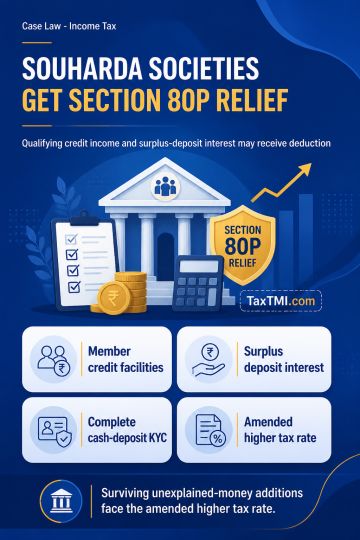
Section 80P deduction covers Souharda credit societies, including qualifying surplus-deposit interest, subject to member KYC verification for cash dep...
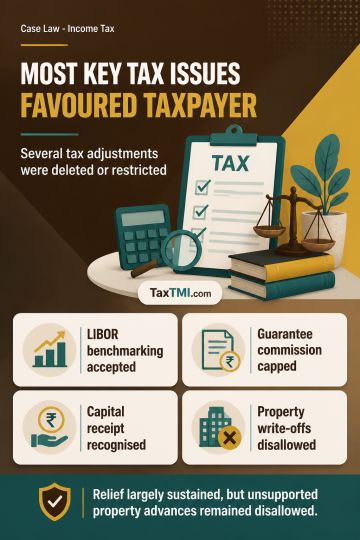
Transfer-pricing benchmarking and capital-receipt principles sustained taxpayer relief, while unsupported property-advance write-offs remained disallo...
Pre-existing operational debt disputes require genuine evidence, while undirected running-account payments may be appropriated on a first-in-first-out...
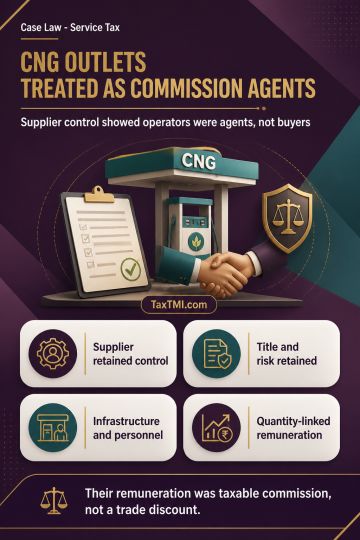
Agency in CNG distribution makes outlet operators commission agents, rendering taxable Business Auxiliary Service rather than purchasing goods for res...
Page of 4790
Press 'Enter' after typing page number.
741 to 760 of 95794 Results
❮
❯
❯❯
0 / 200
Expand Note
Add to Folder
No Folders have been created
+
Are you sure you want to delete "My most important" ?
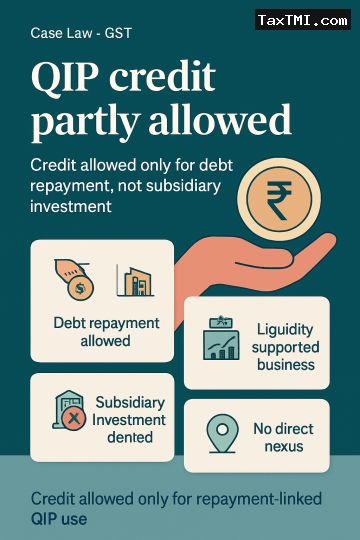
Input tax credit on QIP-related services was held admissible only to the extent the funds were used for repayment or pre-payment of borrowings, because that deployment was treated as business-related and incidental to operations under Section 16(1). The authority linked the tax credit test to the actual use of the QIP proceeds, finding a sufficient nexus where the funds reduced financial liabilities, improved liquidity, and supported business activity. By contrast, credit was denied on the portion used to invest in a wholly owned subsidiary, because the investment was an acquisition of securities by a distinct legal entity and did not create the direct nexus required with the appellant's own business.
Input tax credit on QIP-related services was held admissible only to the extent the funds were used for repayment or pre-payment of borrowings, because that deployment was treated as business-related and incidental to operations under Section 16(1). The authority linked the tax credit test to the actual use of the QIP proceeds, finding a sufficient nexus where the funds reduced financial liabilities, improved liquidity, and supported business activity. By contrast, credit was denied on the portion used to invest in a wholly owned subsidiary, because the investment was an acquisition of securities by a distinct legal entity and did not create the direct nexus required with the appellant's own business.
Note: It is a system-generated summary and is for quick reference only.
 TaxTMI
 of 4790










 Join Channel


 TaxTMI