Tax exemption for regulatory authority income applies retrospectively, subject to non-commercial activity, unchanged income sources, and return filing...
Dispute Resolution Panel objections must reach both prescribed forums; otherwise assessment may proceed and statutory appeal remains the proper remedy...
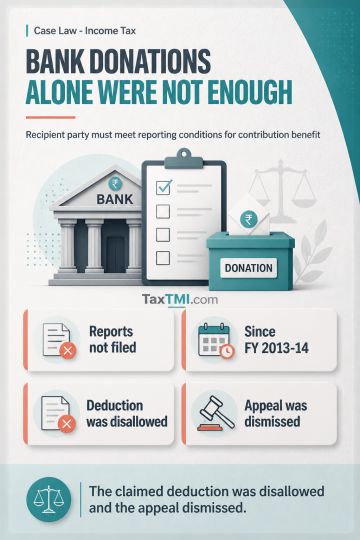
Political contribution deductions require recipient party compliance with contribution-reporting conditions; banking-channel donations alone do not qu...
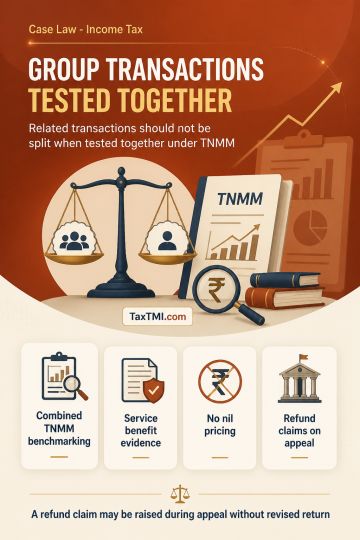
Aggregation under TNMM prevents selective testing of intra-group services without comparable uncontrolled transactions, while appellate additional cla...
Protective assessment cannot duplicate identical receipts under competing characterisations; remote services did not establish a taxable permanent est...
Page of 4792
Press 'Enter' after typing page number.
461 to 480 of 95833 Results
❮
❯
❯❯
0 / 200
Expand Note
Add to Folder
No Folders have been created
+
Are you sure you want to delete "My most important" ?
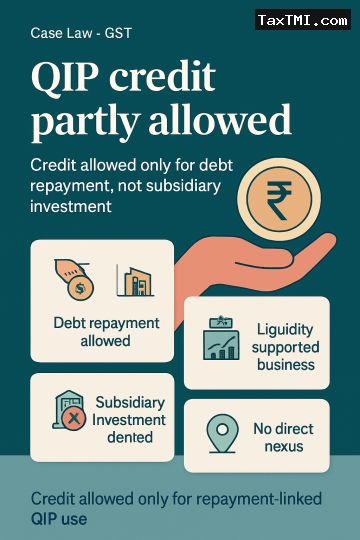
Input tax credit on QIP-related services was held admissible only to the extent the funds were used for repayment or pre-payment of borrowings, because that deployment was treated as business-related and incidental to operations under Section 16(1). The authority linked the tax credit test to the actual use of the QIP proceeds, finding a sufficient nexus where the funds reduced financial liabilities, improved liquidity, and supported business activity. By contrast, credit was denied on the portion used to invest in a wholly owned subsidiary, because the investment was an acquisition of securities by a distinct legal entity and did not create the direct nexus required with the appellant's own business.
Input tax credit on QIP-related services was held admissible only to the extent the funds were used for repayment or pre-payment of borrowings, because that deployment was treated as business-related and incidental to operations under Section 16(1). The authority linked the tax credit test to the actual use of the QIP proceeds, finding a sufficient nexus where the funds reduced financial liabilities, improved liquidity, and supported business activity. By contrast, credit was denied on the portion used to invest in a wholly owned subsidiary, because the investment was an acquisition of securities by a distinct legal entity and did not create the direct nexus required with the appellant's own business.
Note: It is a system-generated summary and is for quick reference only.
 TaxTMI
 of 4792














 Join Channel


 TaxTMI