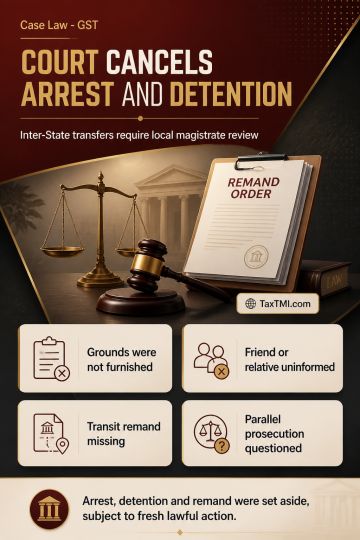
Arrest safeguards and transit remand requirements invalidated detention following inter-State transfer without communicated grounds or magistrate auth...
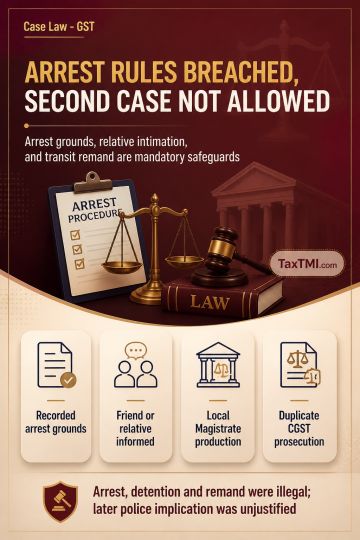
Arrest safeguards require disclosed grounds, relative intimation and transit remand, while duplicate prosecution under the CGST framework is unsustain...
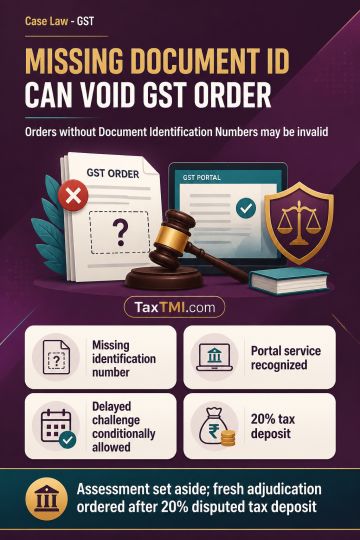
Document Identification Number defects can invalidate GST assessments, with delayed challenges entertained conditionally where patent irregularities e...
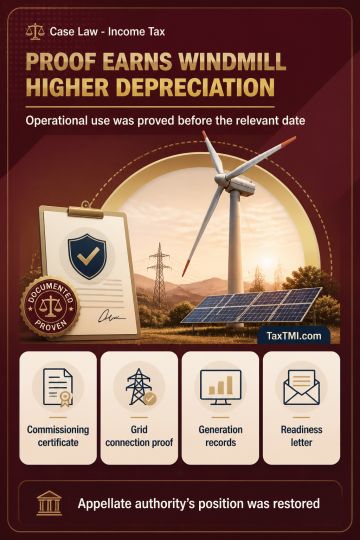
Windmill commissioning evidence supported higher depreciation where grid connection and electricity generation proved operational use before the relev...
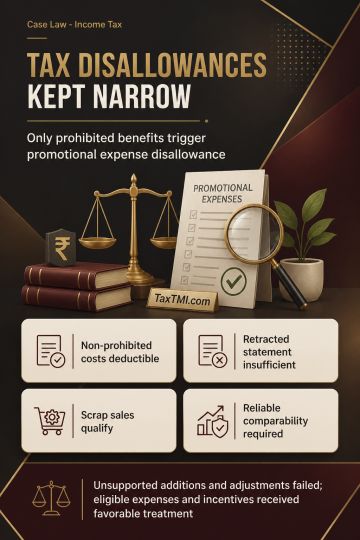
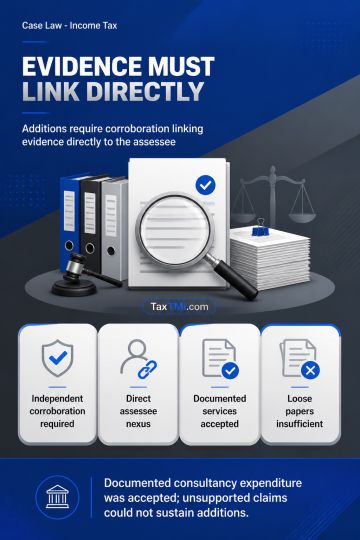
Pharmaceutical promotion and transfer-pricing comparability principles limited disallowances, while uncorroborated search allegations and unsupported ...
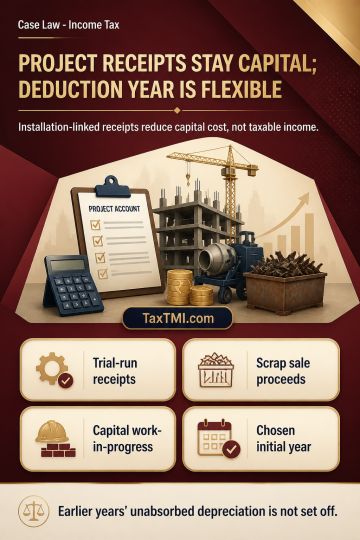
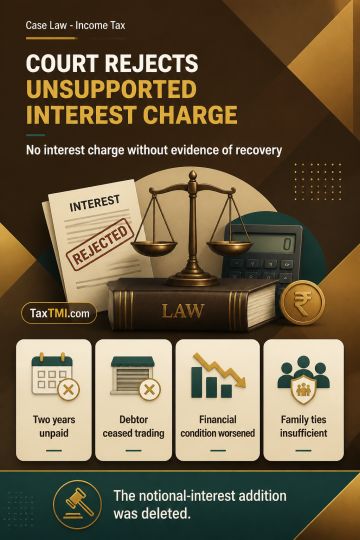
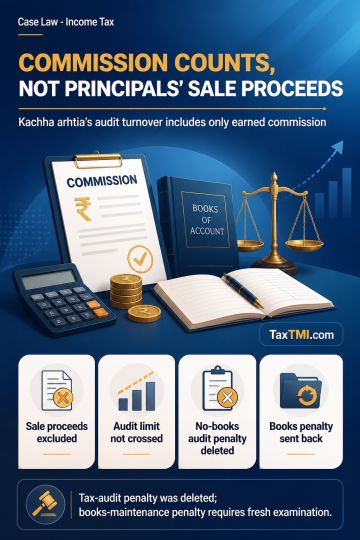
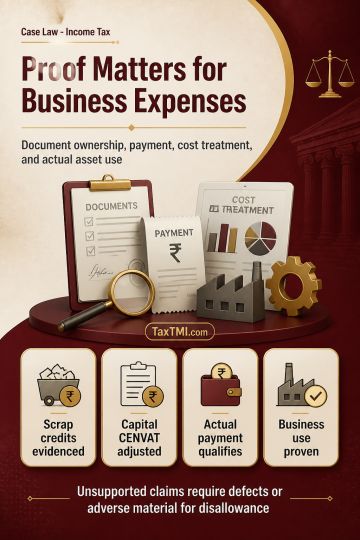
Business expenditure substantiation supports scrap credits, statutory payments and expense claims, while depreciation requires proof of actual busines...
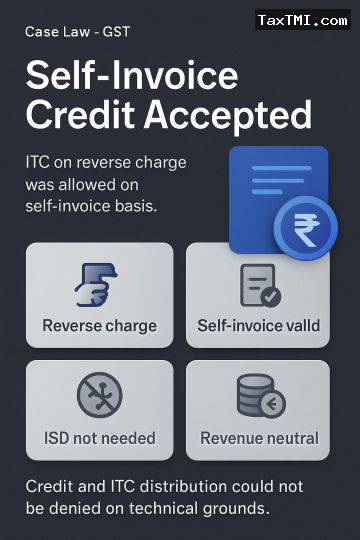
Input tax credit on reverse charge services from an unregistered foreign supplier was treated as sustainable where the registered recipient raised a self-invoice, discharged tax under reverse charge, and claimed credit on that basis. Reading section 9(3), section 16(2)(a), section 31(3)(f) and rule 36 together, the self-invoice was recognised as a valid tax-paying document, and credit could not be denied merely because the foreign supplier's invoice identified a particular unit. The text also states that, for the relevant period, ITC distribution to other distinct persons without Input Service Distributor registration was not impermissible, as unamended section 20 was only enabling and the later compulsory-registration amendment indicated the earlier position. Revenue neutrality was noted as supporting denial of no technical objection.
Input tax credit on reverse charge services from an unregistered foreign supplier was treated as sustainable where the registered recipient raised a self-invoice, discharged tax under reverse charge, and claimed credit on that basis. Reading section 9(3), section 16(2)(a), section 31(3)(f) and rule 36 together, the self-invoice was recognised as a valid tax-paying document, and credit could not be denied merely because the foreign supplier's invoice identified a particular unit. The text also states that, for the relevant period, ITC distribution to other distinct persons without Input Service Distributor registration was not impermissible, as unamended section 20 was only enabling and the later compulsory-registration amendment indicated the earlier position. Revenue neutrality was noted as supporting denial of no technical objection.
Note: It is a system-generated summary and is for quick reference only.
 TaxTMI
 of 4792




 Join Channel


 TaxTMI