Defined public benefit can retain charitable character; registration renewal requires examining genuine activities and legal compliance, not surplus a...
Capital reduction is distinct from share buy-back, preventing buy-back tax; restructuring interest and related business deductions also survive scruti...
Transfer pricing and tax deductions upheld on established principles, while employee contributions and warranty provisions returned for fresh examinat...
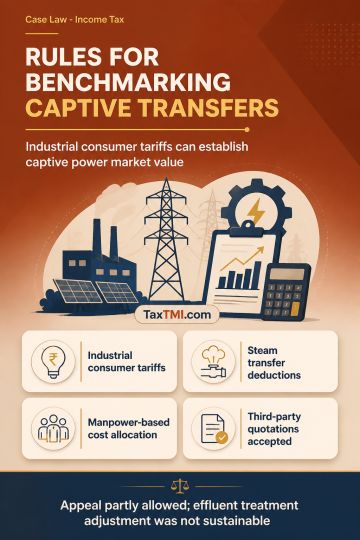
Captive transfer pricing relies on industrial consumer tariffs, while genuine quotations can benchmark effluent treatment transfers under the Other Me...
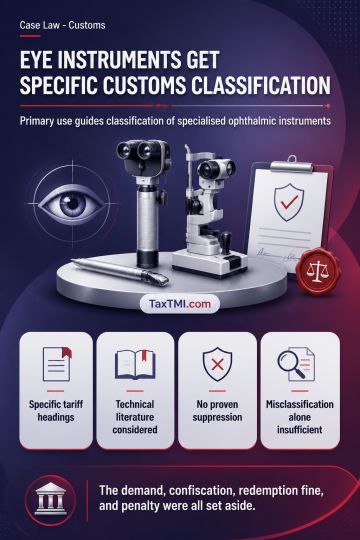
Specific tariff classification for ophthalmic instruments and extended limitation principles determine the treatment of duty demands, confiscation, an...
Integrated golf function determines classification, placing launch monitors and simulators under other golf equipment rather than measuring instrument...
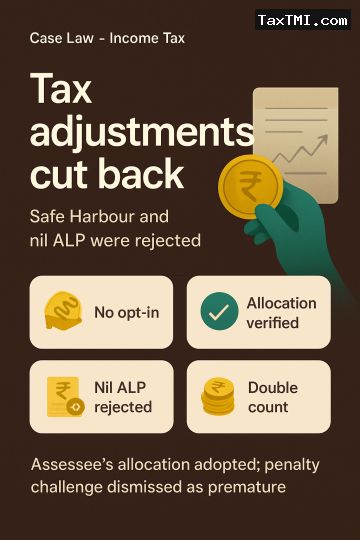
Safe Harbour Rules could not be applied suo motu to rework segmental trading costs where the assessee had not opted for that regime and had furnished segmental accounts with allocation keys; the Assessing Officer/Transfer Pricing Officer was directed to adopt the assessee's allocation after verification. An arm's length price of nil for intra-group services was also rejected because the Other Method requires a comparable uncontrolled transaction, which was not shown, and the services had already been aggregated and benchmarked under TNMM, making a separate adjustment a double count. The same reasoning invalidated the lumpsum licence fee adjustment and separate benchmarking of trademark fee. The penalty challenge was dismissed as premature.
Safe Harbour Rules could not be applied suo motu to rework segmental trading costs where the assessee had not opted for that regime and had furnished segmental accounts with allocation keys; the Assessing Officer/Transfer Pricing Officer was directed to adopt the assessee's allocation after verification. An arm's length price of nil for intra-group services was also rejected because the Other Method requires a comparable uncontrolled transaction, which was not shown, and the services had already been aggregated and benchmarked under TNMM, making a separate adjustment a double count. The same reasoning invalidated the lumpsum licence fee adjustment and separate benchmarking of trademark fee. The penalty challenge was dismissed as premature.
Note: It is a system-generated summary and is for quick reference only.
 TaxTMI
 of 4786















 Join Channel


 TaxTMI
