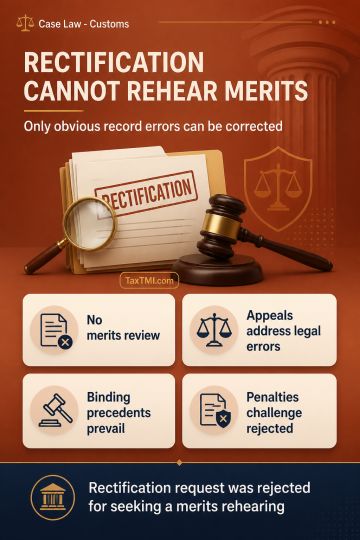
Rectification of mistake remains limited to self-evident record errors, preventing merits review through miscellaneous applications and preserving fin...
Tender creditworthiness conditions may extend to de facto Promoter Directors, with post-participation challenges generally barred absent arbitrariness...
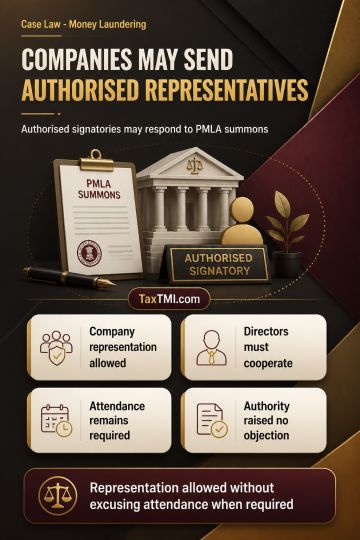
Corporate representation in PMLA summons proceedings permitted through an authorised signatory, subject to directors' continuing cooperation and atten...
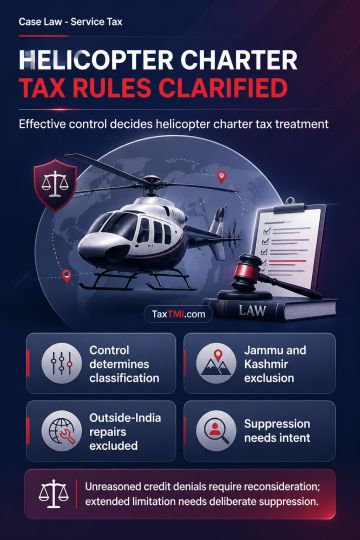
Helicopter charter classification requires effective control analysis, while territorial performance, reasoned credit orders and wilful suppression de...
Specified fund definition expands PAN exemption eligibility for registered alternative investment funds and qualifying International Financial Service...
Tax exemption for specified legal-services authority income applies retrospectively, subject to non-commercial activity, unchanged income sources, and...
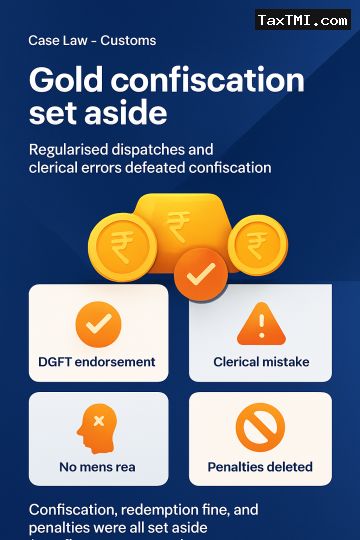
Advance Authorisation disputes over duty-free gold turned on whether later-regularised supporting manufacturers and clerical errors in export documents amounted to diversion or breach of the Actual User condition. The Tribunal treated dispatch to manufacturers later endorsed by DGFT as a curable procedural lapse, not unauthorised diversion, and found no basis for confiscation. It also accepted that excess jewellery over the invoice declaration arose from a clerical mistake, with no mens rea or pecuniary gain, so confiscation and redemption fine were unsustainable. Because the gold was seized before expiry of the export-obligation period and remained part of authorised imports, absolute confiscation was also set aside. Penalties failed with the confiscations and were deleted.
Advance Authorisation disputes over duty-free gold turned on whether later-regularised supporting manufacturers and clerical errors in export documents amounted to diversion or breach of the Actual User condition. The Tribunal treated dispatch to manufacturers later endorsed by DGFT as a curable procedural lapse, not unauthorised diversion, and found no basis for confiscation. It also accepted that excess jewellery over the invoice declaration arose from a clerical mistake, with no mens rea or pecuniary gain, so confiscation and redemption fine were unsustainable. Because the gold was seized before expiry of the export-obligation period and remained part of authorised imports, absolute confiscation was also set aside. Penalties failed with the confiscations and were deleted.
Note: It is a system-generated summary and is for quick reference only.
 TaxTMI
 of 4792













 Join Channel


 TaxTMI