Arrest safeguards and transit remand requirements invalidated detention following inter-State transfer without communicated grounds or magistrate auth...
Arrest safeguards require disclosed grounds, relative intimation and transit remand, while duplicate prosecution under the CGST framework is unsustain...
Document Identification Number defects can invalidate GST assessments, with delayed challenges entertained conditionally where patent irregularities e...
Windmill commissioning evidence supported higher depreciation where grid connection and electricity generation proved operational use before the relev...
Pharmaceutical promotion and transfer-pricing comparability principles limited disallowances, while uncorroborated search allegations and unsupported ...
Business expenditure substantiation supports scrap credits, statutory payments and expense claims, while depreciation requires proof of actual busines...
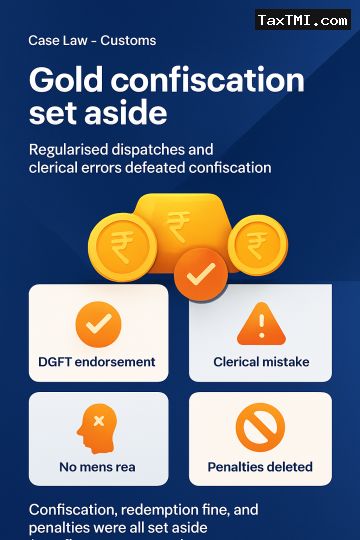
Advance Authorisation disputes over duty-free gold turned on whether later-regularised supporting manufacturers and clerical errors in export documents amounted to diversion or breach of the Actual User condition. The Tribunal treated dispatch to manufacturers later endorsed by DGFT as a curable procedural lapse, not unauthorised diversion, and found no basis for confiscation. It also accepted that excess jewellery over the invoice declaration arose from a clerical mistake, with no mens rea or pecuniary gain, so confiscation and redemption fine were unsustainable. Because the gold was seized before expiry of the export-obligation period and remained part of authorised imports, absolute confiscation was also set aside. Penalties failed with the confiscations and were deleted.
Advance Authorisation disputes over duty-free gold turned on whether later-regularised supporting manufacturers and clerical errors in export documents amounted to diversion or breach of the Actual User condition. The Tribunal treated dispatch to manufacturers later endorsed by DGFT as a curable procedural lapse, not unauthorised diversion, and found no basis for confiscation. It also accepted that excess jewellery over the invoice declaration arose from a clerical mistake, with no mens rea or pecuniary gain, so confiscation and redemption fine were unsustainable. Because the gold was seized before expiry of the export-obligation period and remained part of authorised imports, absolute confiscation was also set aside. Penalties failed with the confiscations and were deleted.
Note: It is a system-generated summary and is for quick reference only.
 TaxTMI
 of 4792





















 Join Channel


 TaxTMI