Ratification of resignation acceptance validates separation retrospectively, while withdrawal may be refused through reasoned administrative discretio...
Nature-dependent electricity contracts receive new Ind AS accounting, hedge designation, transition and financial-statement disclosure requirements fr...
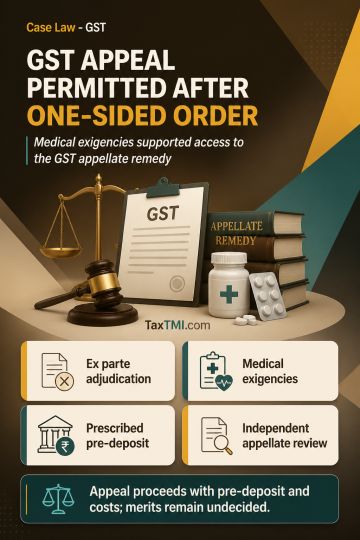
Alternative GST remedy permitted protective writ intervention for ex parte adjudication, preserving independent appellate review of input tax credit d...
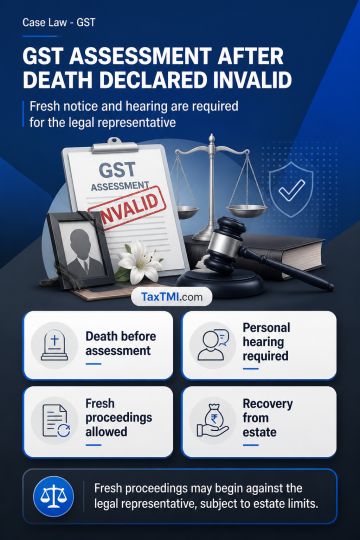
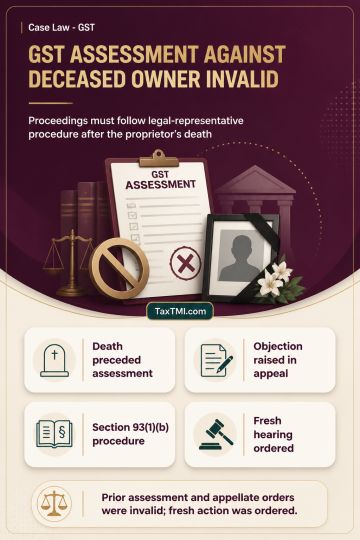
Assessment against deceased sole proprietor requires proceedings against the legal representative, rendering prior assessment and appellate orders inv...
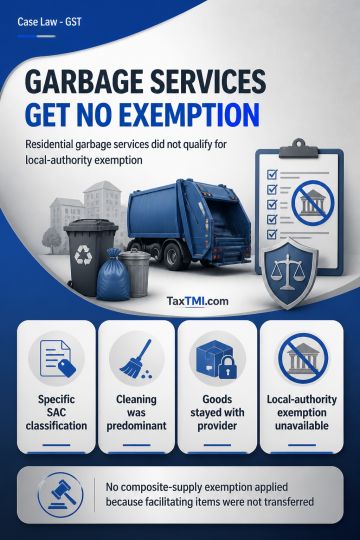
Residential waste collection classification under SAC 999423 defeats composite-supply exemption where facilitating goods are not transferred to the lo...
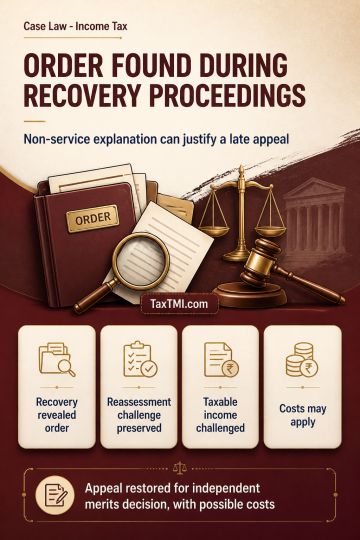
Condonation of delay permits statutory appeal restoration where inadequate service explanation prevented consideration of reassessment and taxable-inc...
Page of 4798
Press 'Enter' after typing page number.
121 to 140 of 95955 Results
❮
❯
❯❯
0 / 200
Expand Note
Add to Folder
No Folders have been created
+
Are you sure you want to delete "My most important" ?
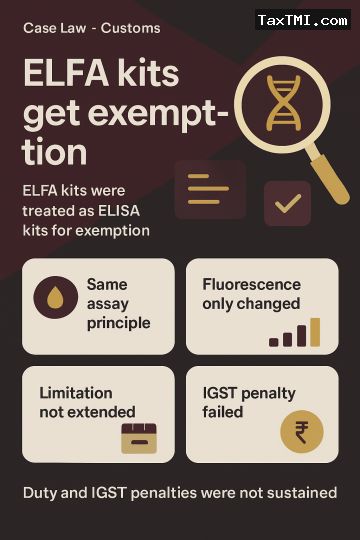
ELFA diagnostic kits were treated as covered by the ELISA exemption because the underlying enzyme-linked immunoassay principle remained the same and only the terminal detection method changed from colourimetric to fluorescence. The Tribunal held that strict construction of exemption entries cannot ignore scientific realities, and applied the genus-species principle and a purposive approach to conclude that technological advancement did not create a separate diagnostic class. It also held that the description of the goods as ELISA kits did not establish wilful suppression or intent to evade duty, so extended limitation was unsustainable. For the relevant period, IGST-related interest and penalty were also held not sustainable.
ELFA diagnostic kits were treated as covered by the ELISA exemption because the underlying enzyme-linked immunoassay principle remained the same and only the terminal detection method changed from colourimetric to fluorescence. The Tribunal held that strict construction of exemption entries cannot ignore scientific realities, and applied the genus-species principle and a purposive approach to conclude that technological advancement did not create a separate diagnostic class. It also held that the description of the goods as ELISA kits did not establish wilful suppression or intent to evade duty, so extended limitation was unsustainable. For the relevant period, IGST-related interest and penalty were also held not sustainable.
Note: It is a system-generated summary and is for quick reference only.
 TaxTMI
 of 4798















 Join Channel


 TaxTMI