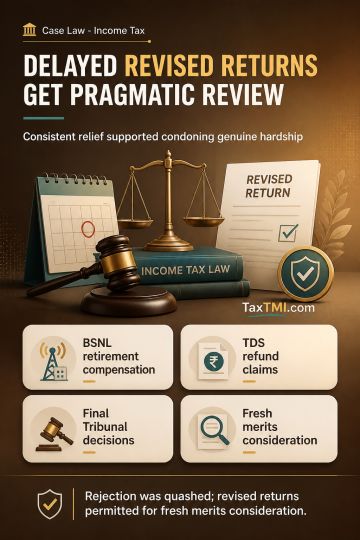
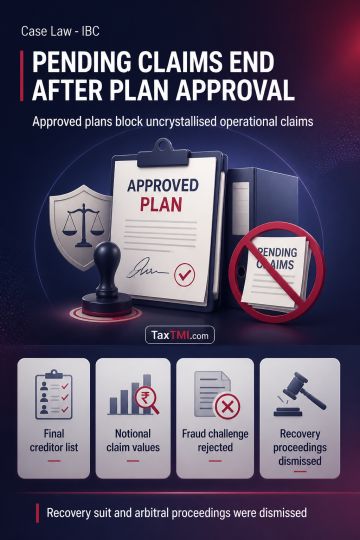
Clean slate principle extinguishes uncrystallised operational claims and bars continuation of pending recovery and arbitral proceedings after plan app...
Works contract classification governs composite layout-development contracts where VAT-paid goods are transferred alongside construction and infrastru...
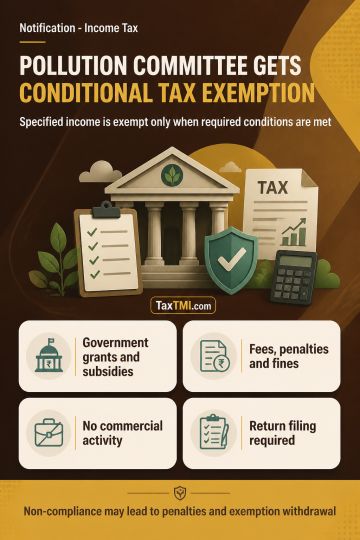
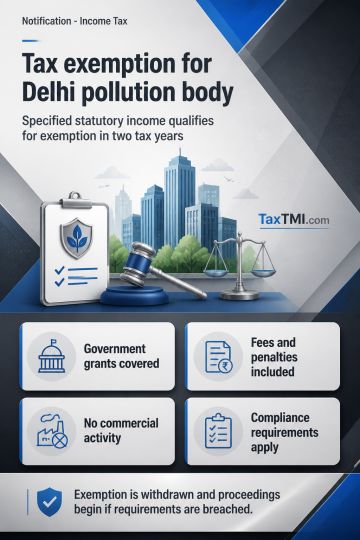
Specified income tax exemption for pollution control body remains conditional on non-commercial activity, unchanged income character, and return filin...
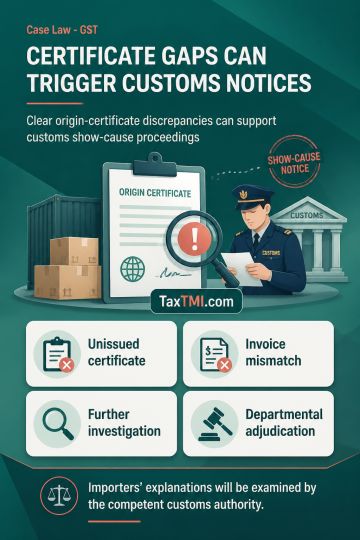
Jurisdictional facts in certificate-of-origin discrepancies can support customs show-cause proceedings, leaving factual explanations for departmental ...
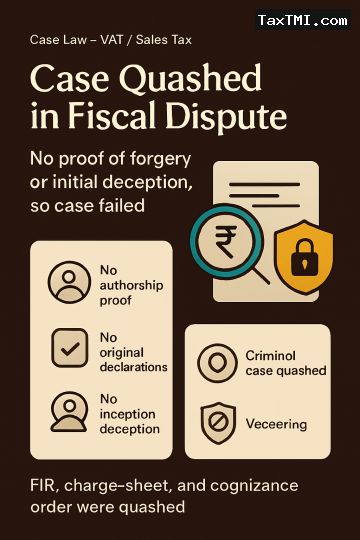
Section 482 CrPC is described as a safeguard against misuse of criminal process, but not as a licence for threshold appreciation of evidence. In a dispute arising from import, customs clearance and later fiscal proceedings, the absence of original transit declarations, forensic or handwriting material, and proof that either petitioner authored the disputed signatures meant forgery under Sections 463, 464 and 468 IPC was not disclosed. The complaint also failed to show deception at the inception of the transaction, cheating by personation or conspiracy. The criminal case was treated as an abuse of process and the FIR, charge-sheet and cognizance order were quashed.
Section 482 CrPC is described as a safeguard against misuse of criminal process, but not as a licence for threshold appreciation of evidence. In a dispute arising from import, customs clearance and later fiscal proceedings, the absence of original transit declarations, forensic or handwriting material, and proof that either petitioner authored the disputed signatures meant forgery under Sections 463, 464 and 468 IPC was not disclosed. The complaint also failed to show deception at the inception of the transaction, cheating by personation or conspiracy. The criminal case was treated as an abuse of process and the FIR, charge-sheet and cognizance order were quashed.
Note: It is a system-generated summary and is for quick reference only.
 TaxTMI
 of 4790





 Join Channel


 TaxTMI