Specified income of Baddi Barotiwala Nalagarh Development Authority receives conditional tax exemption, retrospectively covering its designated assess...
Specified development authority income receives retrospective tax exemption, subject to non-commercial activity, unchanged income sources, and return-...
Unified Brand India framework introduces voluntary Trust Mark certification and funding support for export branding, packaging and global promotional ...
Origin Declaration authentication governs preferential tariff claims under India-UK CETA, requiring a validated reference number before import clearan...
Separate assessment orders for different years remain valid when distinct notices and hearing opportunities prevent prejudice from combined proceeding...
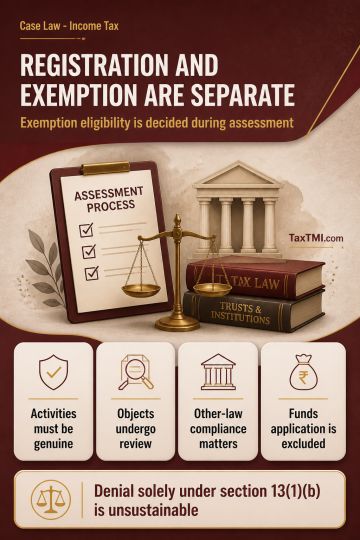
Defined public benefit can retain charitable character; registration renewal requires examining genuine activities and legal compliance, not surplus a...
Page of 4790
Press 'Enter' after typing page number.
941 to 960 of 95794 Results
❮
❯
❯❯
0 / 200
Expand Note
Add to Folder
No Folders have been created
+
Are you sure you want to delete "My most important" ?
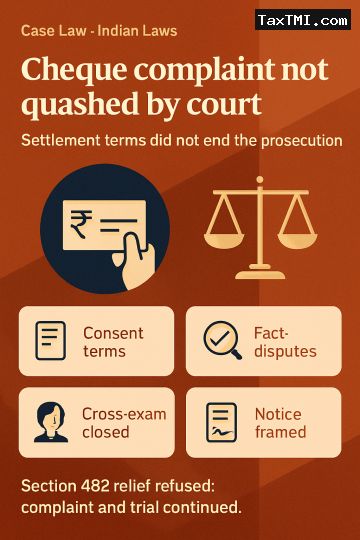
HC declined to quash a cheque dishonour complaint under the inherent jurisdiction because the consent terms prima facie suspended remedies without extinguishing the pending prosecution, and the dispute over transfer of liability and the effect of settlement raised factual and interpretive issues unsuitable for pre-trial interference. The Court distinguished settlements that subsume the original complaint and held that quashing is confined to cases where unimpeachable material completely displaces the allegations. It also upheld closure of cross-examination after repeated adjournments, rejected the challenge to framing of notice in light of counsel's submission that payment could not be made and the matter should proceed, and found no prejudice was shown in the recording of the accused's statement.
HC declined to quash a cheque dishonour complaint under the inherent jurisdiction because the consent terms prima facie suspended remedies without extinguishing the pending prosecution, and the dispute over transfer of liability and the effect of settlement raised factual and interpretive issues unsuitable for pre-trial interference. The Court distinguished settlements that subsume the original complaint and held that quashing is confined to cases where unimpeachable material completely displaces the allegations. It also upheld closure of cross-examination after repeated adjournments, rejected the challenge to framing of notice in light of counsel's submission that payment could not be made and the matter should proceed, and found no prejudice was shown in the recording of the accused's statement.
Note: It is a system-generated summary and is for quick reference only.
 TaxTMI
 of 4790

















 Join Channel


 TaxTMI

