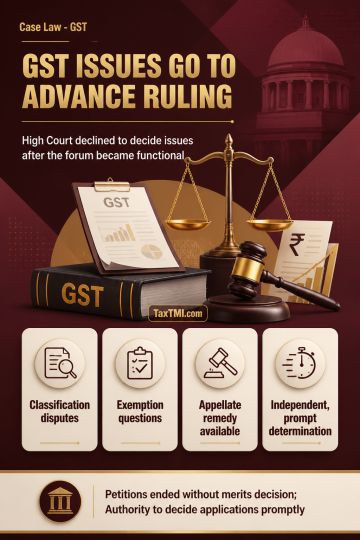
Advance-ruling mechanism governs pending GST classification, exemption and taxability disputes, limiting writ review once the specialised forum functi...
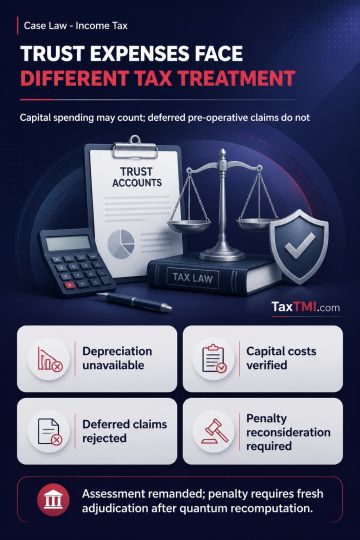
Charitable trust income application permits verified capital expenditure but rejects deferred pre-operative claims and requires reconsideration of con...
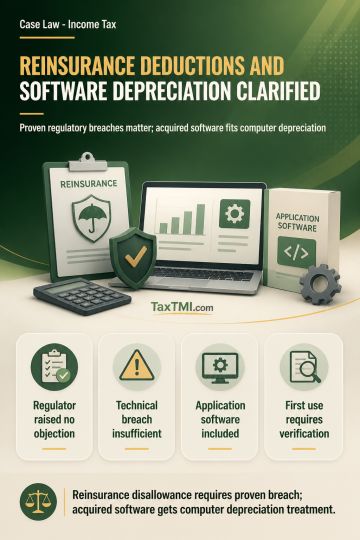
Reinsurance premium deductions require established regulatory breaches, while independently acquired software qualifies within the computer depreciati...
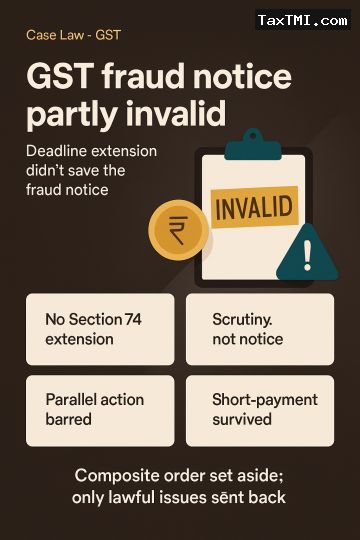
Notification extending the annual return due date for 2017-18 did not extend the department's time to initiate Section 74 fraud proceedings; no separate extension notification for Section 74 was shown, and the March 2021 communication was only a scrutiny notice, not a valid show cause notice. For 2018-19 and 2019-20, parallel CGST proceedings on excess availment of input tax credit were barred where SGST had already initiated action on the same subject matter, making that part of the notice without jurisdiction. The short-payment component, however, was distinct from the SGST mismatch proceedings and could be pursued. The composite order was set aside and remitted for fresh adjudication only on the issues lawfully open to the authority.
Notification extending the annual return due date for 2017-18 did not extend the department's time to initiate Section 74 fraud proceedings; no separate extension notification for Section 74 was shown, and the March 2021 communication was only a scrutiny notice, not a valid show cause notice. For 2018-19 and 2019-20, parallel CGST proceedings on excess availment of input tax credit were barred where SGST had already initiated action on the same subject matter, making that part of the notice without jurisdiction. The short-payment component, however, was distinct from the SGST mismatch proceedings and could be pursued. The composite order was set aside and remitted for fresh adjudication only on the issues lawfully open to the authority.
Note: It is a system-generated summary and is for quick reference only.
 TaxTMI
 of 4792



 Join Channel


 TaxTMI