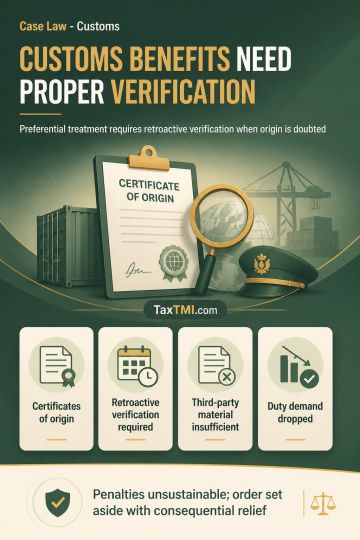
Certificate-of-origin verification procedure governs preferential customs benefits; denial without retroactive verification was set aside with consequ...
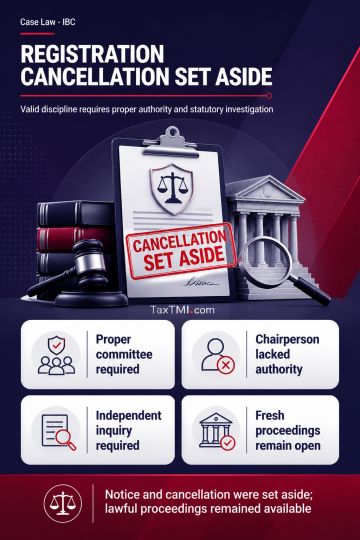
Disciplinary Committee jurisdiction and mandatory investigation requirements invalidated cancellation of an insolvency professional's registration and...
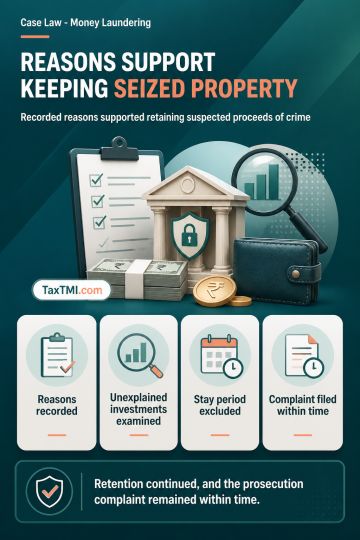
Retention of seized property survives where recorded reasons support proceeds of crime, while stayed investigation periods are excluded from limitatio...
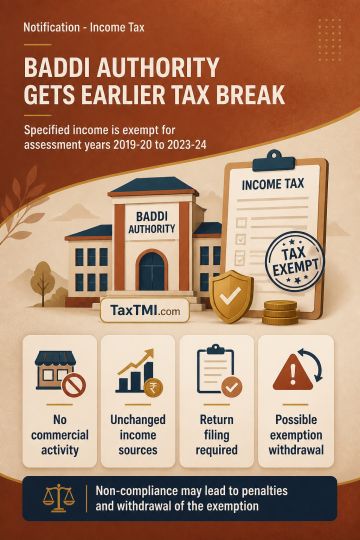
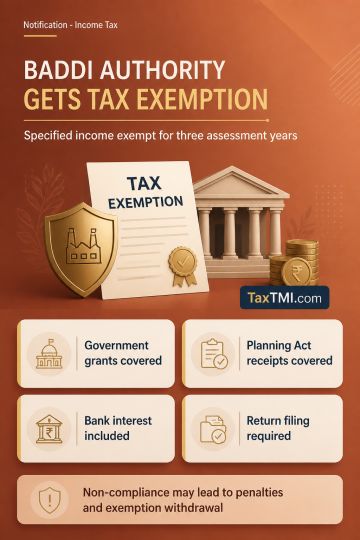
Specified income of Baddi Barotiwala Nalagarh Development Authority receives conditional tax exemption, retrospectively covering its designated assess...
Specified development authority income receives retrospective tax exemption, subject to non-commercial activity, unchanged income sources, and return-...
Page of 4789
Press 'Enter' after typing page number.
921 to 940 of 95770 Results
❮
❯
❯❯
0 / 200
Expand Note
Add to Folder
No Folders have been created
+
Are you sure you want to delete "My most important" ?
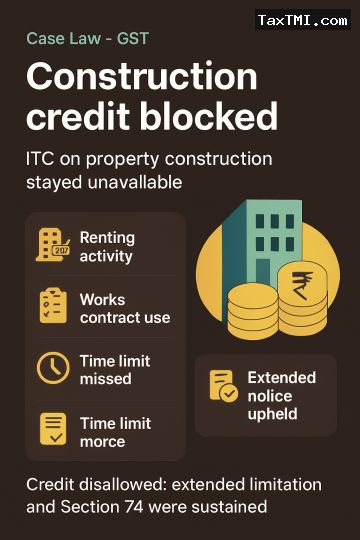
Blocked input tax credit on construction of immovable property remained unavailable where the taxpayer was engaged in renting immovable property, used works contract services for construction, and the credit fell within clauses (c) and (d) of Section 17(5). The Court also treated the claim as belated because the credit was not taken within the statutory time limit under Section 16. It held that a unilateral letter proposing availment did not amount to departmental approval, and that availing a much larger credit without concurrence justified invocation of fraud and suppression, the extended limitation period, and Section 74. The challenge to the common notice covering multiple tax periods also failed.
Blocked input tax credit on construction of immovable property remained unavailable where the taxpayer was engaged in renting immovable property, used works contract services for construction, and the credit fell within clauses (c) and (d) of Section 17(5). The Court also treated the claim as belated because the credit was not taken within the statutory time limit under Section 16. It held that a unilateral letter proposing availment did not amount to departmental approval, and that availing a much larger credit without concurrence justified invocation of fraud and suppression, the extended limitation period, and Section 74. The challenge to the common notice covering multiple tax periods also failed.
Note: It is a system-generated summary and is for quick reference only.
 TaxTMI
 of 4789








 Join Channel


 TaxTMI