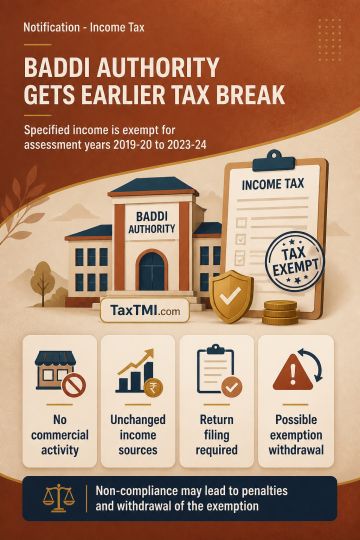
Specified income of Baddi Barotiwala Nalagarh Development Authority receives conditional tax exemption, retrospectively covering its designated assess...
Specified development authority income receives retrospective tax exemption, subject to non-commercial activity, unchanged income sources, and return-...
Unified Brand India framework introduces voluntary Trust Mark certification and funding support for export branding, packaging and global promotional ...
Origin Declaration authentication governs preferential tariff claims under India-UK CETA, requiring a validated reference number before import clearan...
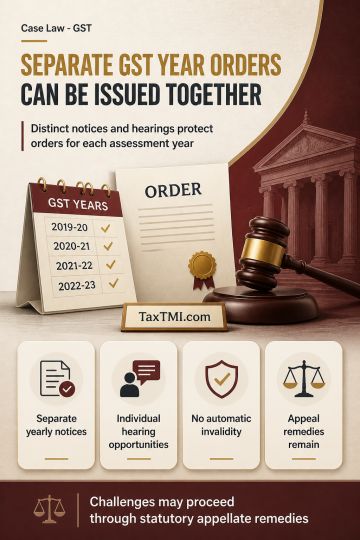
Separate assessment orders for different years remain valid when distinct notices and hearing opportunities prevent prejudice from combined proceeding...
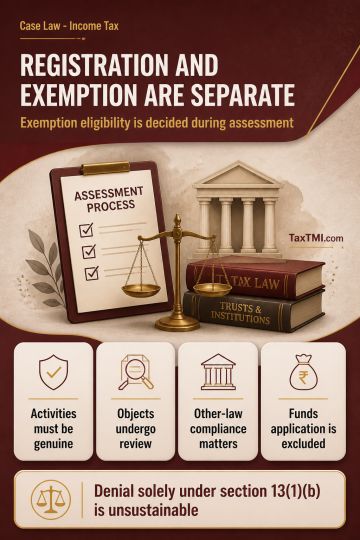
Defined public benefit can retain charitable character; registration renewal requires examining genuine activities and legal compliance, not surplus a...
Page of 4790
Press 'Enter' after typing page number.
941 to 960 of 95794 Results
❮
❯
❯❯
0 / 200
Expand Note
Add to Folder
No Folders have been created
+
Are you sure you want to delete "My most important" ?
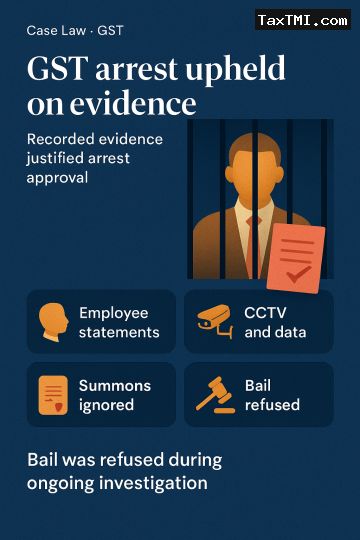
Approval for arrest under the CGST Act does not require final adjudication of tax liability; it is enough that recorded material creates a reason to believe that an offence under section 132 has been committed. The approving authority relied on employee and recipient statements, transporter data, CCTV footage, melting reports, tally data and seized records, so the arrest approval was not mechanical. In assessing bail, the accused's failure to answer summons, failure to produce promised particulars and retraction of an earlier statement led the court to find that he was unlikely to cooperate without custodial interrogation. Given the stage of investigation, alleged gravity and antecedents, bail was refused.
Approval for arrest under the CGST Act does not require final adjudication of tax liability; it is enough that recorded material creates a reason to believe that an offence under section 132 has been committed. The approving authority relied on employee and recipient statements, transporter data, CCTV footage, melting reports, tally data and seized records, so the arrest approval was not mechanical. In assessing bail, the accused's failure to answer summons, failure to produce promised particulars and retraction of an earlier statement led the court to find that he was unlikely to cooperate without custodial interrogation. Given the stage of investigation, alleged gravity and antecedents, bail was refused.
Note: It is a system-generated summary and is for quick reference only.
 TaxTMI
 of 4790















 Join Channel


 TaxTMI

