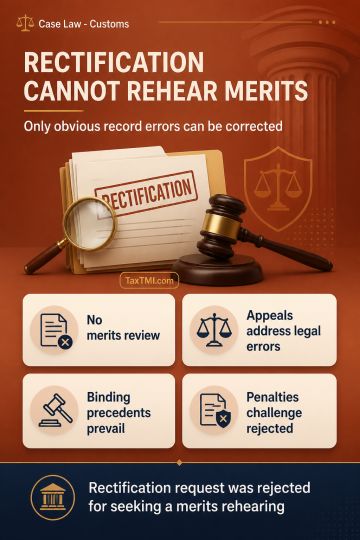
Rectification of mistake remains limited to self-evident record errors, preventing merits review through miscellaneous applications and preserving fin...
Tender creditworthiness conditions may extend to de facto Promoter Directors, with post-participation challenges generally barred absent arbitrariness...
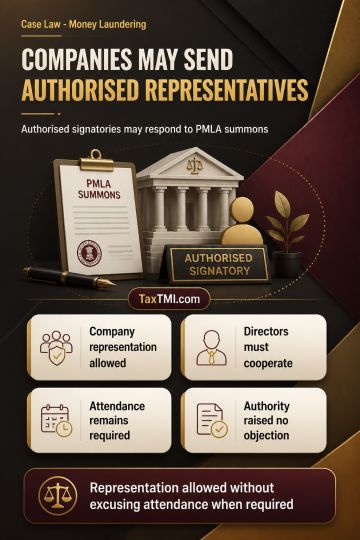
Corporate representation in PMLA summons proceedings permitted through an authorised signatory, subject to directors' continuing cooperation and atten...
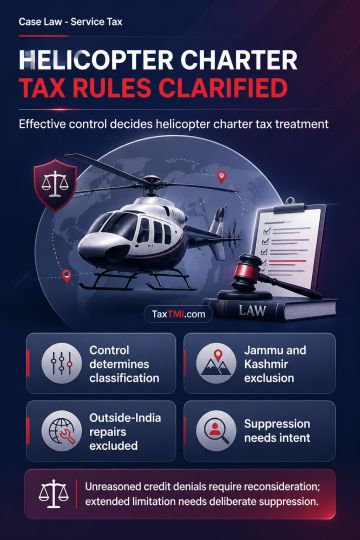
Helicopter charter classification requires effective control analysis, while territorial performance, reasoned credit orders and wilful suppression de...
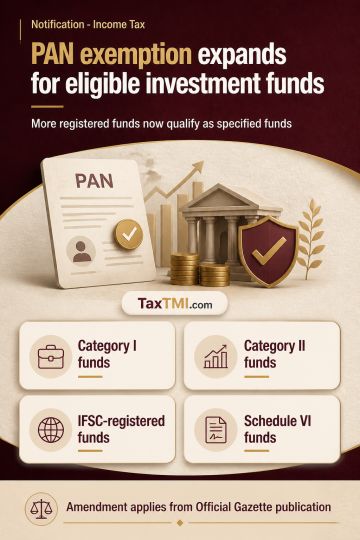
Specified fund definition expands PAN exemption eligibility for registered alternative investment funds and qualifying International Financial Service...
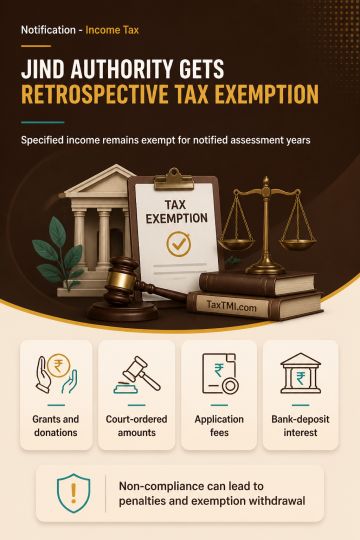
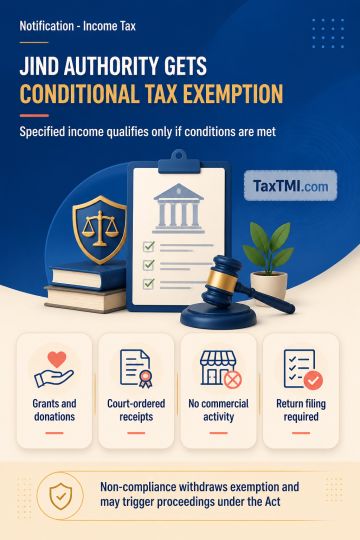
Tax exemption for specified legal-services authority income applies retrospectively, subject to non-commercial activity, unchanged income sources, and...
Page of 4792
Press 'Enter' after typing page number.
701 to 720 of 95833 Results
❮
❯
❯❯
0 / 200
Expand Note
Add to Folder
No Folders have been created
+
Are you sure you want to delete "My most important" ?
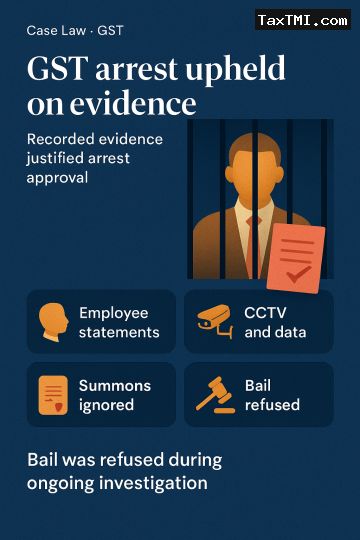
Approval for arrest under the CGST Act does not require final adjudication of tax liability; it is enough that recorded material creates a reason to believe that an offence under section 132 has been committed. The approving authority relied on employee and recipient statements, transporter data, CCTV footage, melting reports, tally data and seized records, so the arrest approval was not mechanical. In assessing bail, the accused's failure to answer summons, failure to produce promised particulars and retraction of an earlier statement led the court to find that he was unlikely to cooperate without custodial interrogation. Given the stage of investigation, alleged gravity and antecedents, bail was refused.
Approval for arrest under the CGST Act does not require final adjudication of tax liability; it is enough that recorded material creates a reason to believe that an offence under section 132 has been committed. The approving authority relied on employee and recipient statements, transporter data, CCTV footage, melting reports, tally data and seized records, so the arrest approval was not mechanical. In assessing bail, the accused's failure to answer summons, failure to produce promised particulars and retraction of an earlier statement led the court to find that he was unlikely to cooperate without custodial interrogation. Given the stage of investigation, alleged gravity and antecedents, bail was refused.
Note: It is a system-generated summary and is for quick reference only.
 TaxTMI
 of 4792








 Join Channel


 TaxTMI